Taiwan vs US Culture: Useful Mandarin Phrases, Real Dialogues and the Everyday Differences
By Raytio Ray
Taiwan vs US culture for people living in Taipei: why locals act as they do, Mandarin phrases with pinyin, real dialogues and a comparison table.
Taiwan vs US culture: what this guide covers
You already live here, so you know the surface rules. If you want the etiquette basics (MRT food ban, gift taboos, Ghost Month, temples), read our Taiwanese culture and etiquette guide first. This one picks up where that stops: why people behave the way they do, the Mandarin you will actually use every week, four short dialogues you can copy, and an honest look at Taiwan vs US culture.
Three habits that make more sense once you know why
People ask "have you eaten?" instead of "how are you?" 吃飽了嗎 (chī bǎo le ma) or the Taiwanese Hokkien version comes from leaner times, when asking if someone had eaten was how you showed care. Today it is mostly older people and neighbors who say it. It is a greeting, not an invitation. Answer "吃飽了" (chī bǎo le, I've eaten) or "還沒" (hái méi, not yet) and move on.
"Personal" questions are small talk. Your age, salary, rent, whether you are married, whether you gained weight: these come up early, especially from aunties, landlords and taxi drivers. It is not rude here. Age sets how people address you, and money questions are practical curiosity. Deflect with a laugh and a vague number if you prefer.
Strangers are reserved, service is warm. Taiwanese people rarely chat with strangers on the street, but shop staff call you 帥哥 (shuàigē, handsome) or 美女 (měinǚ, beautiful) as a friendly default, and service is fast and polite without any tip involved. The warmth is built into the job, not bought.
The phrases you will use every week
All in traditional characters with Taiwan usage. Pinyin shows the tone changes you will hear in real speech (不 becomes bú before a fourth tone).
- Chinese: 你好 / 早安 | Pinyin: nǐ hǎo / zǎo ān | Meaning: Hello / good morning | When to use it: 早安 is what breakfast shop staff say to you
- Chinese: 謝謝 | Pinyin: xièxie | Meaning: Thank you | When to use it: Constantly
- Chinese: 不會 / 不客氣 | Pinyin: bú huì / bú kèqi | Meaning: You're welcome | When to use it: 不會 ("not at all") is the most Taiwanese reply
- Chinese: 不好意思 | Pinyin: bù hǎo yìsi | Meaning: Excuse me, sorry (light) | When to use it: Squeezing past, getting attention, small mistakes
- Chinese: 對不起 | Pinyin: duìbuqǐ | Meaning: I'm sorry (real) | When to use it: When you actually did something wrong
- Chinese: 沒關係 | Pinyin: méi guānxi | Meaning: It's fine | When to use it: Replying to an apology
- Chinese: 好 / 對 | Pinyin: hǎo / duì | Meaning: OK / right, correct | When to use it: 好 agrees to a plan, 對 confirms a fact
- Chinese: 內用 / 外帶 | Pinyin: nèiyòng / wàidài | Meaning: Eat here / takeout | When to use it: Every counter asks this
- Chinese: 不用袋子 | Pinyin: bú yòng dàizi | Meaning: No bag needed | When to use it: Checkout, saves you the bag fee
- Chinese: 載具 | Pinyin: zàijù | Meaning: (Mobile) invoice carrier | When to use it: Show your e-invoice barcode
- Chinese: 買單 / 結帳 | Pinyin: mǎidān / jiézhàng | Meaning: Check, please | When to use it: 買單 at sit-down restaurants, 結帳 anywhere
- Chinese: 這個多少錢? | Pinyin: zhège duōshǎo qián? | Meaning: How much is this? | When to use it: Markets, small shops
- Chinese: 計程車 / 捷運 | Pinyin: jìchéngchē / jiéyùn | Meaning: Taxi / MRT | When to use it: Taiwan words: not 出租車 or 地鐵
Two Taiwanese Hokkien bits that win smiles: 你好 (lí hó, hello) and 好食 (hó-tsia̍h, often spelled "ho jia", delicious). Bonus: 歹勢 (pháinn-sè), the Hokkien "sorry, my bad", which you will hear daily even from people speaking Mandarin.
The 不好意思 vs 對不起 rule: Americans say "sorry" for everything. In Taiwan, 不好意思 covers 90% of those moments. 對不起 is heavier, closer to a real apology, so using it for bumping a shopping bag sounds dramatic.
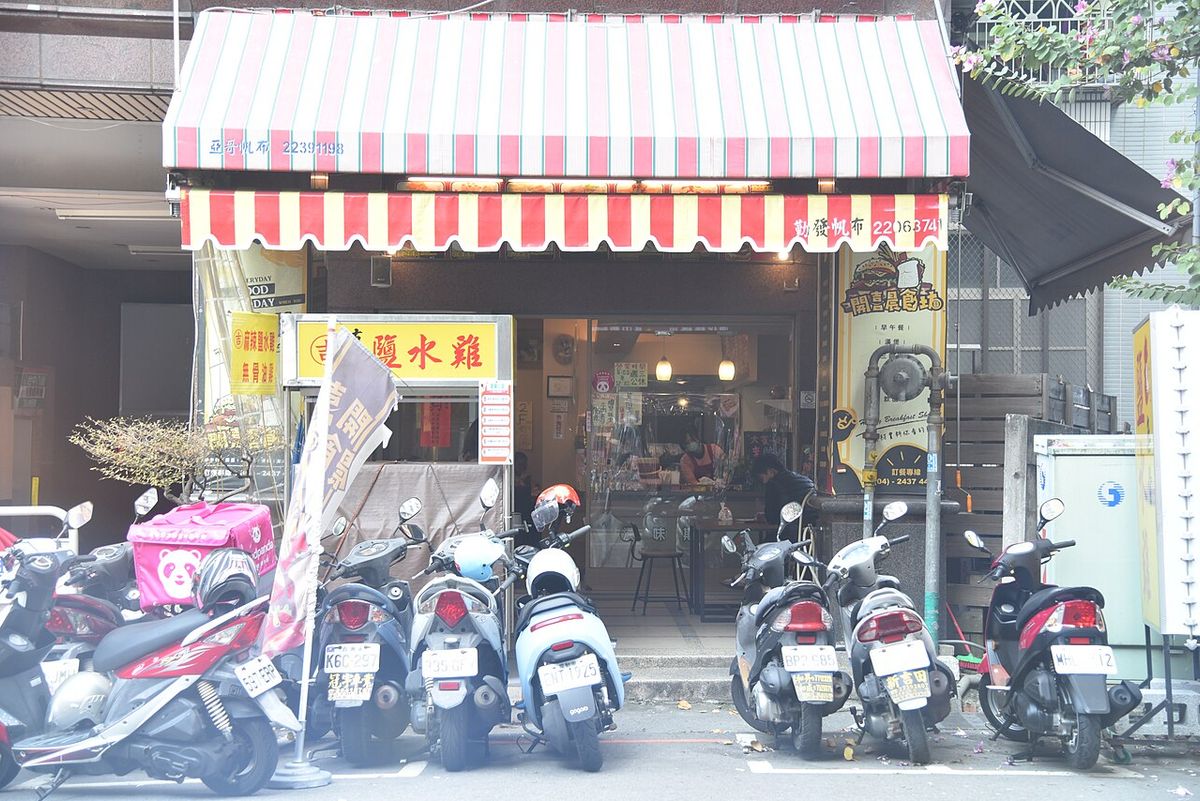
Photo: WC-QHS via Wikimedia Commons, CC BY-SA 4.0
Four dialogues you can copy
At the breakfast shop (早餐店)
Chains like Mei Er Mei (美而美), MWD (麥味登) and Laya Burger (拉亞漢堡), plus thousands of independent shops, open around 6am. Order at the counter, pay at the end.
- Staff: 早安,帥哥要什麼? (zǎo ān, shuàigē yào shénme?) Morning, what would you like?
- You: 我要一個起司蛋餅,一杯大冰奶。(wǒ yào yí ge qǐsī dànbǐng, yì bēi dà bīng nǎi.) A cheese egg crepe and a large iced milk tea.
- Staff: 內用還是外帶? (nèiyòng háishì wàidài?) Here or to go?
- You: 外帶,謝謝。(wàidài, xièxie.) To go, thanks.
- Staff: 好,等一下喔。(hǎo, děng yíxià o.) OK, just a moment.
Tip: 冰奶 is milk tea, the default breakfast drink. Ask for 少冰 (shǎo bīng) for less ice.
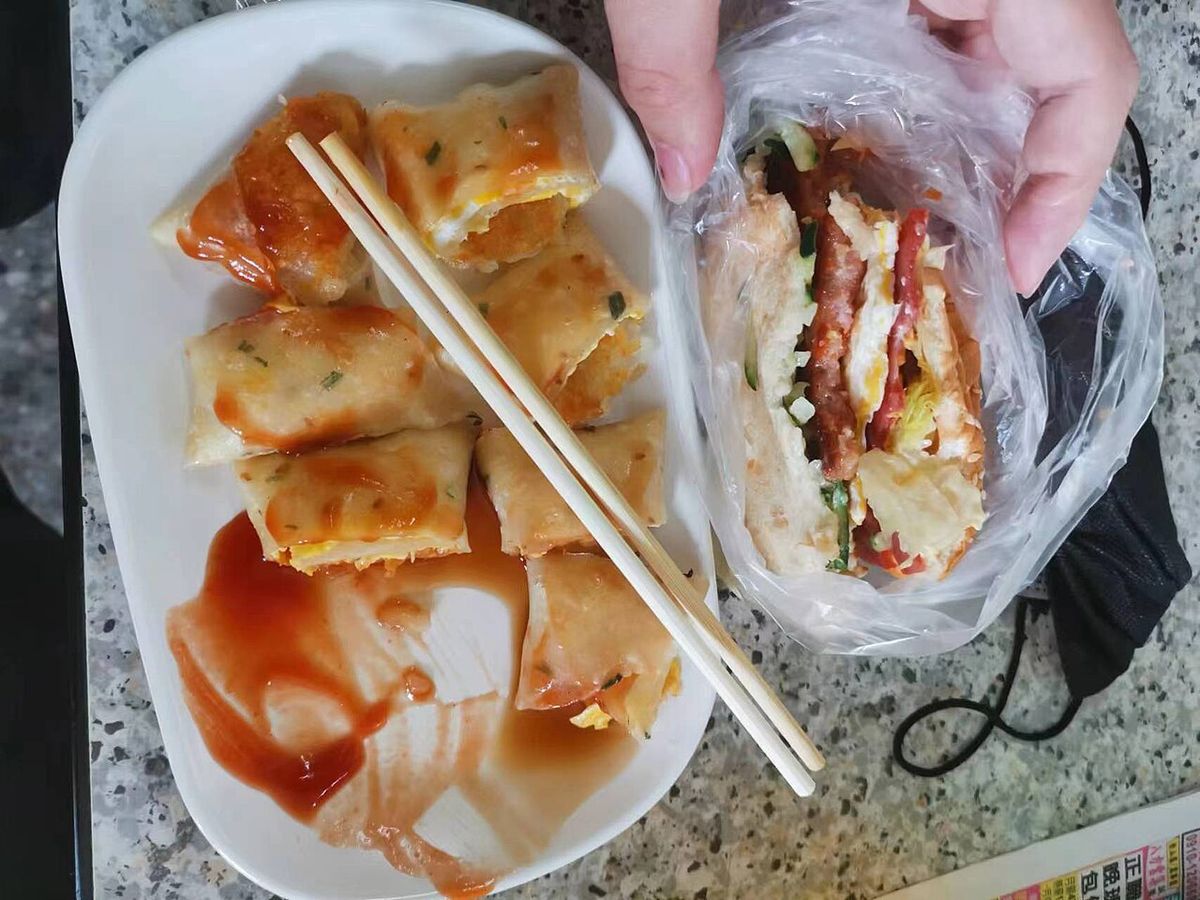
Photo: Wikimedia Commons, public domain (CC0)
At the convenience store checkout
- Clerk: 要袋子嗎? (yào dàizi ma?) Do you need a bag?
- You: 不用,謝謝。(bú yòng, xièxie.) No, thanks.
- Clerk: 有載具嗎? (yǒu zàijù ma?) Do you have a carrier?
- You: 有。(yǒu.) Yes. (show the barcode)
- Clerk: 便當要加熱嗎? (biàndāng yào jiārè ma?) Heat up the bento?
- You: 要,謝謝。(yào, xièxie.) Yes, please.
They may also ask 要統編嗎? (yào tǒngbiān ma?), a company tax ID for expense claims. Just say 不用. Our convenience store guide explains how to set up the carrier barcode.
In a taxi (計程車)
- You: 你好,我要到捷運科技大樓站。(nǐ hǎo, wǒ yào dào jiéyùn Kējì Dàlóu zhàn.) Hi, to Technology Building MRT station.
- Driver: 好。(hǎo.) OK.
- You: 可以刷悠遊卡嗎? (kěyǐ shuā Yōuyóukǎ ma?) Can I pay with EasyCard?
- Driver: 可以。(kěyǐ.) Sure.
- You: 前面路口停就好。(qiánmiàn lùkǒu tíng jiù hǎo.) Just stop at the next intersection.
Taipei taxis start at NT$85 for the first 1.25 km, plus NT$20 between 11pm and 6am. Many accept EasyCard, and the Uber and 55688 apps work too. No tip.
Messaging your landlord on LINE
- You: 房東你好,熱水器壞了,沒有熱水。(fángdōng nǐ hǎo, rèshuǐqì huài le, méiyǒu rè shuǐ.) Hi, the water heater is broken, there's no hot water.
- Landlord: 不好意思,我請師傅去看。你什麼時候方便? (bù hǎo yìsi, wǒ qǐng shīfu qù kàn. nǐ shénme shíhou fāngbiàn?) Sorry, I'll send a repairman. When suits you?
- You: 明天晚上七點以後可以。(míngtiān wǎnshang qī diǎn yǐhòu kěyǐ.) Tomorrow after 7pm works.
- Landlord: 好,我再跟你說。(hǎo, wǒ zài gēn nǐ shuō.) OK, I'll confirm.
Always add a photo, and follow up the next day. "我再跟你說" is friendly, not a firm time.
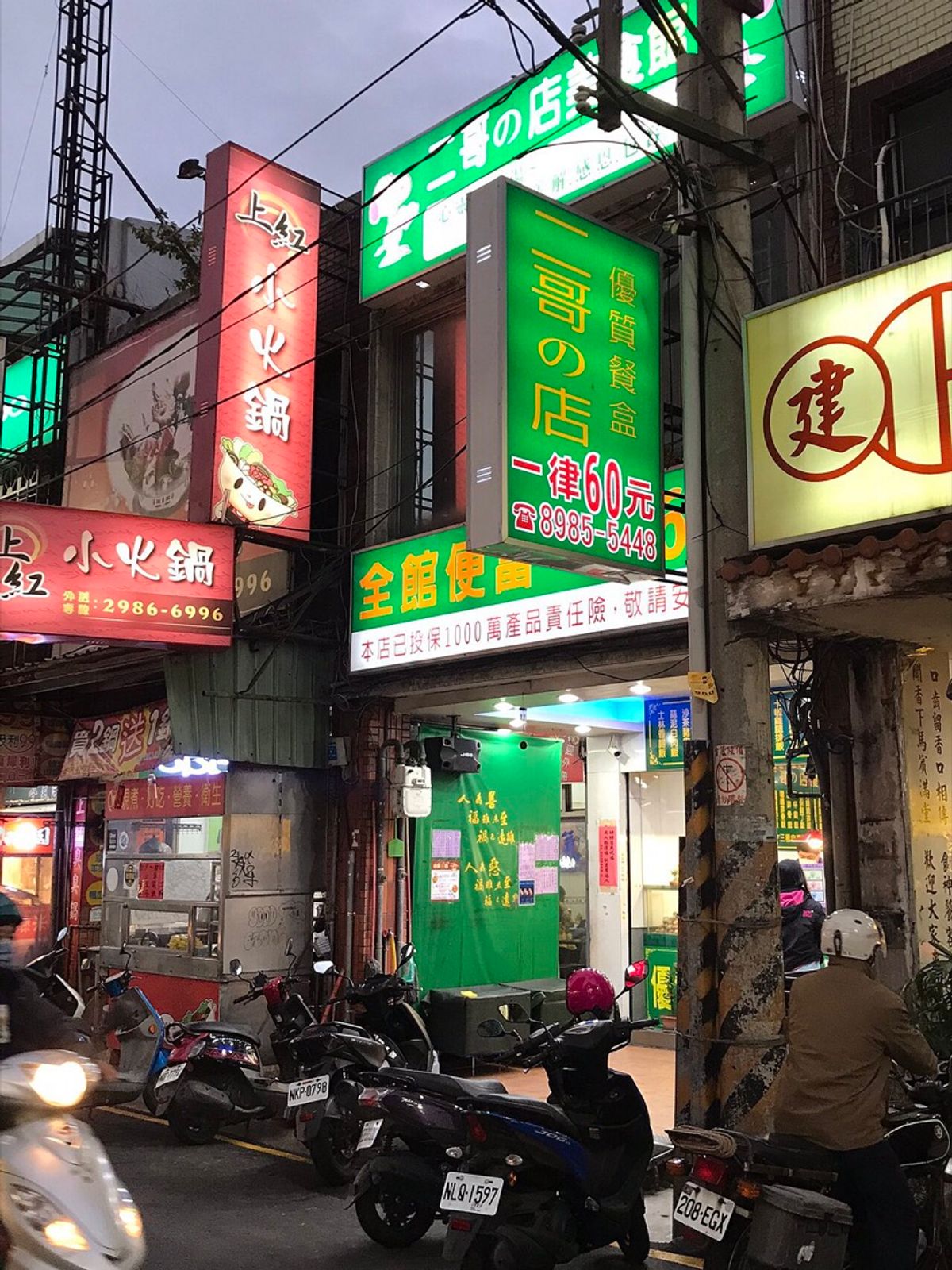
Photo: Brian Hioe via Wikimedia Commons, CC0
Taiwan vs US culture: the comparison table
- Topic: Communication | Taiwan: Indirect, saving face matters | United States: Direct, "just tell me" is valued
- Topic: Tipping | Taiwan: None; 10% service charge at sit-down restaurants | United States: 15 to 20% expected
- Topic: Safety | Taiwan: Phones and laptops left on café tables | United States: Don't try it in most cities
- Topic: Guns | Taiwan: Civilian ownership tightly restricted, almost nobody owns one | United States: About 120 civilian guns per 100 people
- Topic: Healthcare | Taiwan: Clinic visit typically around NT$150 to 250 out of pocket under NHI | United States: Cost depends on insurance, surprise bills common
- Topic: Work | Taiwan: Longer hours, clear hierarchy | United States: Shorter average hours, flatter offices
- Topic: Family | Taiwan: Many adults live with parents until marriage | United States: Moving out young is the norm
- Topic: Food | Taiwan: Shared dishes, cheap eating out daily | United States: Individual plates, eating out is a treat
- Topic: Getting around | Taiwan: MRT, buses, scooters | United States: Car-dependent outside big cities
- Topic: Trash | Taiwan: Meet the truck at a set time, no curbside bins | United States: Bins at the curb, weekly pickup
- Topic: Small talk | Taiwan: Age, salary, weight are fair game | United States: Off limits with strangers
- Topic: Time | Taiwan: Punctual for work and trains, flexible socially | United States: Similar, but "running late" texts are expected
What the numbers say
Safety. Taipei scored 83 in Numbeo's 2026 Safety Index, third among major cities worldwide behind Doha and Dubai (Taiwan News). Scooter traffic is the real danger, not crime.
Guns. The US has about 120.5 civilian firearms per 100 residents, the highest in the world (Small Arms Survey 2018). In Taiwan, private gun ownership is close to zero because of strict licensing.
Work hours. Taiwanese workers averaged about 2,032 hours in 2023 versus about 1,765 in the US, per Our World in Data. The legal week is 40 hours in both. The difference shows up in unpaid overtime and LINE messages after work. Hierarchy is stronger too: the boss speaks first, and you don't contradict a manager in a meeting, you raise it privately afterwards.
Healthcare. Under National Health Insurance, a clinic visit costs a registration fee (often NT$150 or so) plus a NT$50 basic copay, and you usually see a doctor the same day without an appointment. This is the difference Americans notice most. See our NHI guide for enrollment.
Living with parents. In the US, 18% of 25 to 34 year olds lived in a parent's home in 2023 (Pew Research), and it is often seen as a setback. In Taiwan it is normal and practical for unmarried adults, given Taipei rents. Your Taiwanese coworker at 32 still living at home is not unusual.
Food. Dinner is shared from the middle of the table, and eating out is cheaper than cooking for one. A bento lunch is roughly NT$100 in Taipei today (the NT$60 sign in the photo above is an older one), and a breakfast shop meal is often less. That is why many Taipei rentals have tiny kitchens.
When you do miss American food, a familiar meal helps more than you'd expect. Full disclosure: this one is ours. Hotdogray, the hot dog kitchen inside our darts bar AI DARTS near Zhongxiao Dunhua, makes American-style chili dogs with a slow-cooked chili from an American friend's family recipe, and plenty of expats come in for it around Thanksgiving and Christmas. Serving hours vary, so check its LINE before you go.
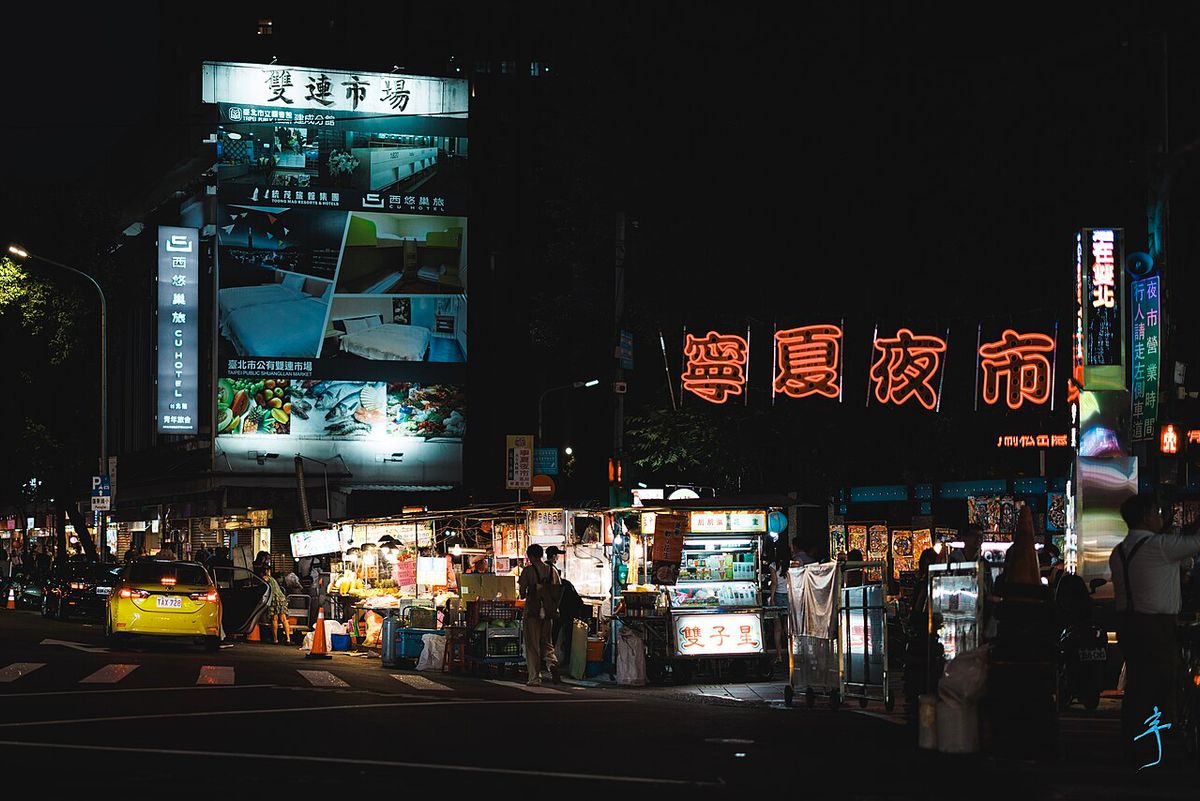
Photo: 迷惘的人生 via Wikimedia Commons, CC BY-SA 2.0
Directness: the one difference that causes real trouble
The biggest friction for Americans is not food or language. It is "no." Taiwanese people avoid a flat refusal, so 可能有點困難 (kěnéng yǒudiǎn kùnnan, "might be a bit difficult") usually means no. Pushing harder makes the other person lose face, and then you get a polite yes that never happens.
Our recommendation: ask open questions ("什麼時候可以?" when is possible?) instead of yes/no ones, put agreements in writing on LINE, and praise in public, correct in private. With landlords this works far better than an American-style direct complaint.
Start with three phrases
This week, learn 不好意思, 不用袋子 and 內用 or 外帶. Add the breakfast shop order next, and most of your daily Mandarin is covered.
If you are still settling in, our first 72 hours checklist covers the practical setup, and if you need help with apartment hunting or a landlord conversation in Chinese, see our services.