Cockroaches, Ants, Mosquitoes and Geckos: Keeping Pests Out of Your Taipei Apartment
By Raytio Ray
Cockroaches in a Taipei apartment usually come up the drains. Which gel baits and drain covers work, dengue mosquito rules, ants, rats, geckos, and who pays.
Why cockroaches in Taipei apartments are so common
If you have found cockroaches in your Taipei apartment, it does not mean the place is dirty. Taipei is hot, wet and dense, and most foreigners rent in buildings that are 30 to 50 years old. Those buildings share walls, shared pipe shafts and a drainage system connected to the city sewers, and the big roaches live down there. Your job is not to make your apartment roach-free forever. It is to close the doors they walk in through and kill the few that make it.
Below: cockroaches, ants, mosquitoes, rats and geckos. Only one of them is a friend.
Know your two cockroaches
Almost every roach you will see belongs to one of two species, and they need different tactics.
- : Size | American cockroach (美洲蟑螂): Big, 3 to 4 cm, reddish brown | German cockroach (德國蟑螂): Small, about 1.5 cm, light brown with two dark stripes
- : Where it comes from | American cockroach (美洲蟑螂): Drains, sewers, pipe shafts, the building's trash area | German cockroach (德國蟑螂): Cardboard boxes, secondhand appliances, the neighbor's kitchen
- : Where you see it | American cockroach (美洲蟑螂): Bathroom, near floor drains, at night | German cockroach (德國蟑螂): Kitchen cabinets, around the fridge and stove
- : What it means | American cockroach (美洲蟑螂): A route from outside is open | German cockroach (德國蟑螂): A colony is living inside your unit
One or two big American roaches in summer is normal Taipei life. Seeing small German roaches in daylight is a different story: it means there are a lot of them, and you should act this week.
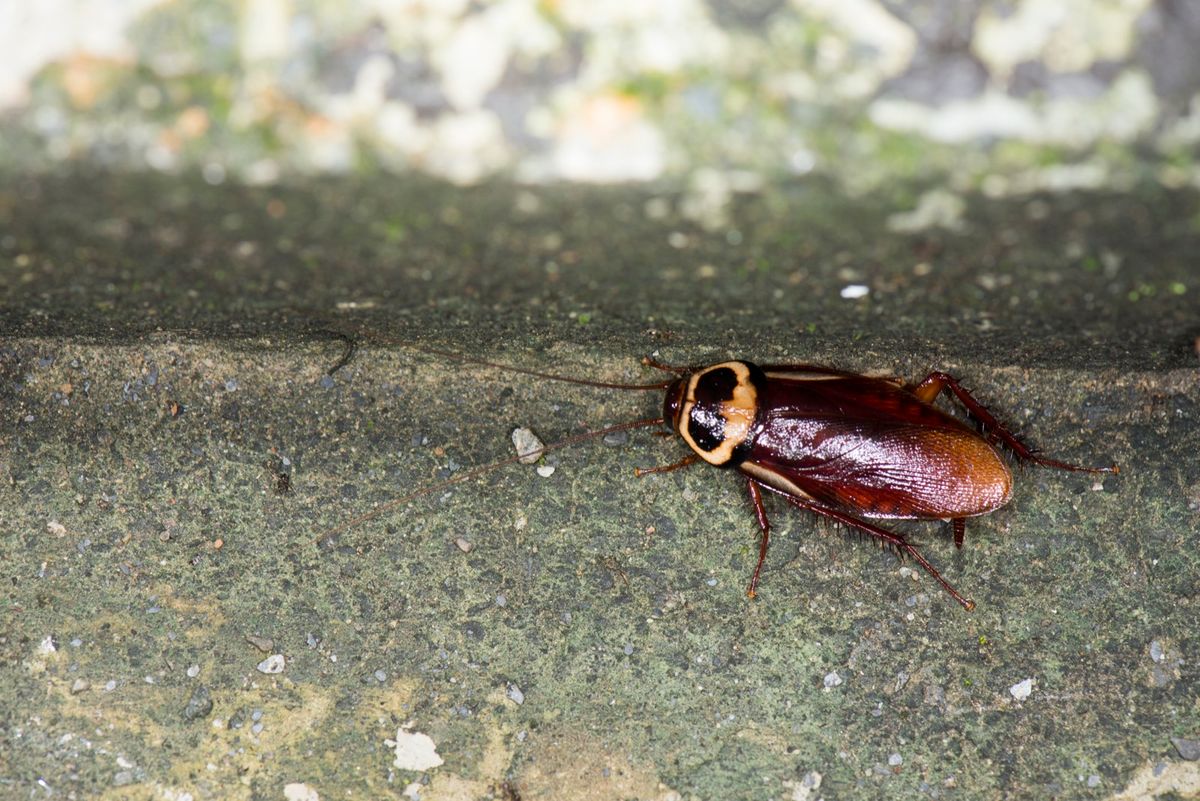
Photo: LiCheng Shih via Wikimedia Commons, CC BY 2.0
The real entry point: your floor drains
In many older Taiwanese bathrooms and balconies, the floor drain (地漏) has no proper water trap, or the trap dries out because nobody uses that drain. That leaves an open pipe straight down to where the American roaches live. It is also why some bathrooms smell like a sewer.
Our setup
- Put an anti-odor drain insert (防臭地漏) in every floor drain. Search 防臭地漏 or 防蟲地漏 at a hardware store (五金行), at a home store like 特力屋 (B&Q Taiwan), or on Shopee. The common types are a silicone or magnetic flap insert that opens when water flows down and closes after. Measure the drain opening before you buy. No tools needed.
- Cover drains you never use. The washing machine drain on the balcony and the second bathroom are the usual culprits. A flat silicone drain cover or a weighted plug works.
- Pour a bucket of water into rarely used drains once a week if they do have a trap, so it never dries out.
- Plug the sink and bathtub at night, and fill any visible gap around pipes under the sink with sealant or steel wool.
Do drains first. Bait kills the roaches that are already inside; the drain cover stops the next ones.
The best cockroach bait in Taiwan: gel, not spray
Sprays kill the one roach you can see. Gel baits kill the ones you cannot see, because roaches eat the bait, go back to hide, and the poison spreads to others that eat their droppings or bodies. For German roaches especially, gel bait is the only thing that really works at home.
What we would buy
- 一點絕 2% gel bait (BASF, hydramethylnon 2%). This is the best-known roach gel on Taiwanese shelves and our first pick. It is imported by Taiwan BASF under permit 環署衛輸字第0543號 and sold at PX Mart, Watsons, momo and Shopee. It works slowly (roaches typically die within a day or two of eating it), which is the point: they have time to go back to the nest first.
- 速必效 gel bait (imidacloprid 2.15%). A cheaper option with a different active ingredient. Useful as a backup if roaches stop taking the first bait after a few months, since rotating ingredients helps against bait aversion.
- Combat 威滅 bait stations. Closed plastic boxes: less effective than gel in cracks, but safer with small children or pets.
How to place gel properly
- Small dots, about the size of a grain of rice or a pea, not a long line.
- Put them where roaches hide, not where you see them walk: inside cabinet hinges, under the sink, behind the fridge and microwave, near the water heater, in the corners of the bathroom ceiling panel.
- Never spray insecticide or cleaner near the bait. It contaminates the gel and roaches will avoid it. This is the most common mistake.
- Replace dots that dry out or disappear, usually every few weeks. Expect two to three weeks before you see a real drop.
Check the permit number. Every legal household insecticide in Taiwan (環境用藥) must carry a permit number on the label, such as 環署衛製字 (made in Taiwan) or 環署衛輸字 (imported), from the Ministry of Environment (formerly the EPA). Cheap unlabeled "magic" powders on online marketplaces often have no permit, and selling them is illegal. If the box has no permit number, skip it.
Ants: bait them, do not spray the trail
Ants show up in Taipei kitchens fast, especially before rain and through summer. The instinct is to wipe and spray the trail. Do not. You will kill twenty and the colony behind the wall will send more.
- Use a sweet ant gel or ant bait station containing fipronil at a low dose (0.01%). Combat 威滅 sells an ant bait station (滅蟻隊), and 速必效 sells a sweet ant gel. Put it right next to the trail and let them carry it home. It usually takes three to seven days.
- Store sugar, honey, pet food and anything opened in sealed containers.
- After the ants are gone, wipe the trail with soapy water or diluted vinegar to remove the scent path.
Mosquitoes and dengue fever
Dengue fever in Taiwan is spread by two daytime-biting mosquitoes, Aedes aegypti and Aedes albopictus, both black with white stripes on the legs. According to Taiwan's Ministry of Health and Welfare, Aedes aegypti lives mainly from Budai in Chiayi southward, while Aedes albopictus is found across Taiwan's lowlands, including Taipei.
Most local outbreaks happen in the south. In 2025, Taiwan CDC counted 26 local dengue cases by early November, 13 of them in Kaohsiung, with one each in Taipei City and New Taipei City, plus over 200 imported cases from travelers. Risk in Taipei is low, but not zero, and it peaks in the warm wet months from summer into autumn.
What Taiwan CDC tells residents to do
The official slogan is 巡、倒、清、刷: check (巡) your home for standing water, dump (倒) it out, clear away (清) containers you do not need, and scrub (刷) the inside walls of containers, because Aedes eggs stick just above the waterline and can survive dry for months.
In an apartment, that means plant saucers, buckets on the balcony, flower vases and the AC drip tray.
Our setup
- Intact window screens (紗窗). If yours are torn, ask the landlord; replacing them is cheap.
- An electric mosquito swatter (電蚊拍). Every Taiwanese household has one, and you will understand why by July.
- Repellent containing DEET, picaridin or IR3535, which are the ingredients Taiwan CDC recommends.
- If you get a high fever with a headache, pain behind the eyes, or joint and muscle pain, see a doctor and mention any recent travel to Southeast Asia. The Taiwan CDC hotline is 1922 (or 0800-001922).
Rats: rarer than you fear
Rats are less common inside apartments than roaches, partly because Taipei has no street trash cans and residents hand their garbage directly to the truck. If you want to understand that system, see our guide to Taiwan trash collection. Rats are more likely in ground floor units, buildings with restaurants downstairs, and buildings that keep trash in a basement room.
Signs are droppings like dark rice grains, chewed packaging and scratching in the ceiling at night. Our view: use snap traps along walls rather than poison, because a poisoned rat often dies inside a wall or ceiling and the smell lasts for weeks. Block gaps around pipes with steel wool. If you hear them in the ceiling, that is a building problem, so tell the landlord or the building management committee (管委會).
Geckos are on your side
The small translucent lizards on your walls and windows are house geckos (壁虎), usually species like the common house gecko. They are harmless, do not bite people in any meaningful way, and eat mosquitoes, moths and small cockroaches. The chirping at night is them. Taiwanese households leave them alone, and so should you; the only downside is small droppings on the windowsill.
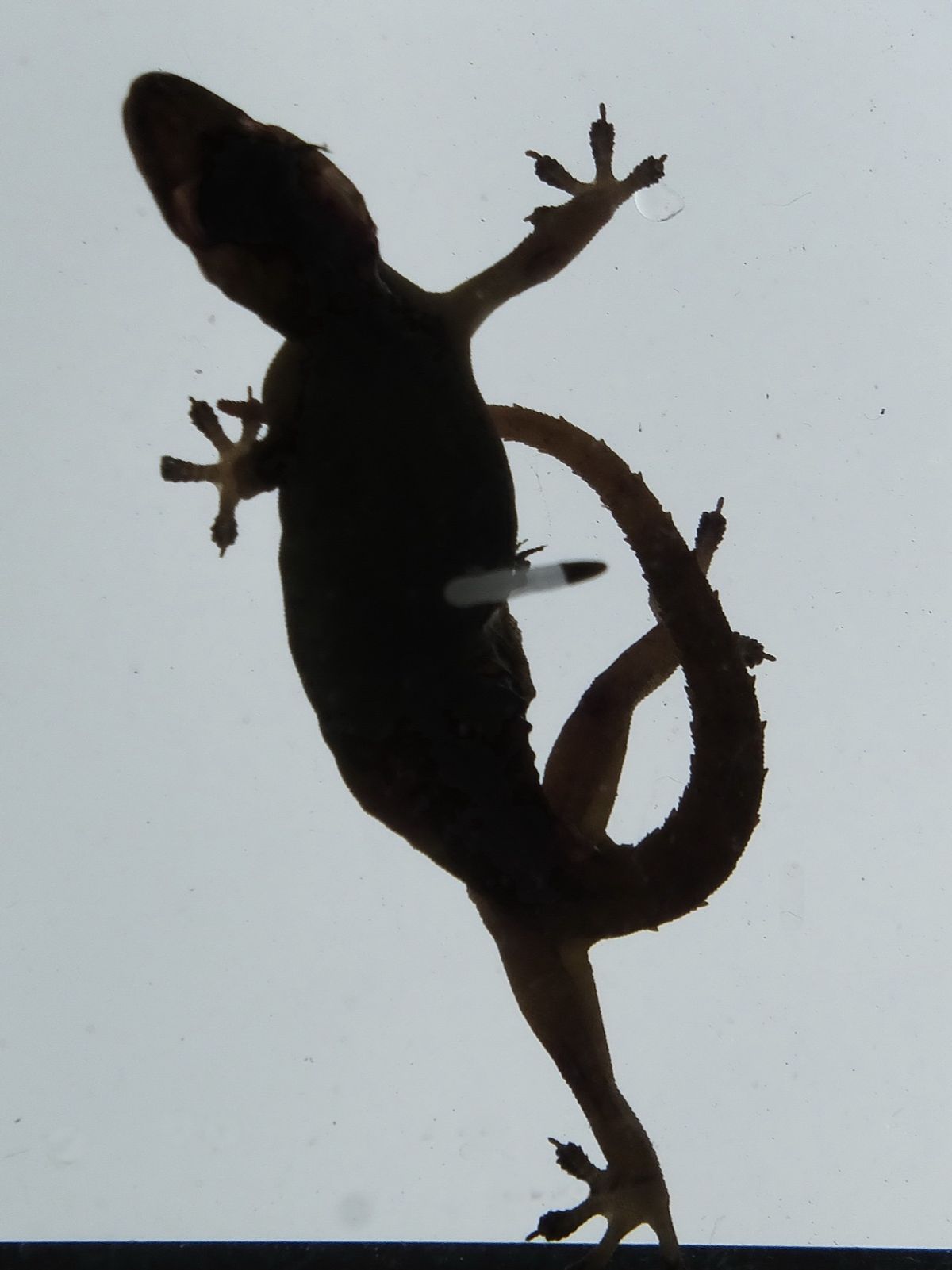
Photo: lienyuan lee via Wikimedia Commons, CC BY 3.0
When to call a pest control company (除蟲公司)
Call a professional if you see German roaches in daylight after a month of baiting, if there are rats inside the unit, or if you find termites (白蟻) in wooden door frames or floors. A typical visit starts with an inspection, then gel bait in cracks and kitchen areas, a residual spray along drains and entry points, and a follow-up visit two to four weeks later.
How to choose one
- In Taiwan, pest control companies must hold a 病媒防治業 license from the Ministry of Environment. Ask for the license number and look it up in the government's 環境用藥許可證及病媒防治業查詢系統 (environmental pesticide and pest control business query system).
- Ask for a written service record listing the chemicals used, the date and the technician. A licensed company should have no problem providing one.
- Get two quotes, and ask how long to stay out and what to do with pets.
Who pays: landlord or tenant?
There is no specific rule for pests, so it depends on the cause and your contract.
- The landlord's side: Under Taiwan's Civil Code (Article 429), repairs to the rental property are the landlord's responsibility unless the contract says otherwise. A floor drain with no water trap, holes in walls around pipes, broken screens and a heavy infestation that was there when you moved in all fall here.
- Your side: Routine bait, ant traps, drain inserts you choose to add, and anything caused by how you live, such as food left out or trash kept inside for days.
- The building's side: Pipe shafts, basements and trash rooms belong to the common areas. Ask the management committee whether they schedule regular treatment.
Practical tip: in your first week, photograph any droppings, dead roaches or broken screens and send them to your landlord on LINE. It makes the "this was here before me" conversation much easier.
Keep it clean, keep it dry
Clean kitchens and bathrooms give pests less to eat and fewer places to hide, which makes every step above work better. If the place was not properly cleaned when you moved in, read what clean actually means in a Taiwanese rental and our guide to hiring an apartment cleaner in Taipei. And since roaches love damp corners, our guide to preventing mold in your Taipei apartment solves two problems at once.
Let TRA Live do the deep clean
Bait and drain covers work far better in a kitchen without old grease behind the stove and crumbs under the fridge. That deep clean is the part most people put off, and it's exactly what our cleaning service is for:
- Move-in deep clean: we clean the places previous tenants left behind, such as behind and under appliances, cabinet corners, the range hood and bathroom drains, so you start with nothing for pests to feed on.
- Regular cleaning: weekly or biweekly visits keep the kitchen and bathrooms in the state that keeps roaches and ants away.
- We talk to your landlord in Chinese if we find something that's the landlord's job, such as a drain with no water trap or gaps around pipes.
We're a cleaning service, not a pest control company: for a heavy infestation, call a licensed 除蟲公司 first, then book a clean to keep it from coming back. Message us on LINE with your apartment size and we'll quote individually.