Scams in Taiwan: The Ones Hitting Foreign Residents Right Now (and How to Spot Them)
By Raytio Ray
Scams in Taiwan cost victims NT$89 billion in 2025. The fake calls, texts, LINE groups and job offers aimed at foreigners, how to verify with 165 and 111.
Taiwan is one of the safest places you will ever live, right up until your phone rings. Scams in Taiwan are an industry, not a rare event: according to the National Police Agency's 165 anti-fraud dashboard, victims lost about NT$89.3 billion in 2025 across roughly 162,000 reported cases. The good news is that losses are falling fast (the second half of 2025 was down around 48% on the year before), and almost every scam follows a script you can learn to recognize in ten seconds.
This guide covers the scams that actually reach foreign residents in Taipei, from fake "bank" calls to job offers that can get your own account frozen. If you are still apartment hunting, rental scams are their own category and we cover them separately in common rental scams targeting foreigners in Taipei.
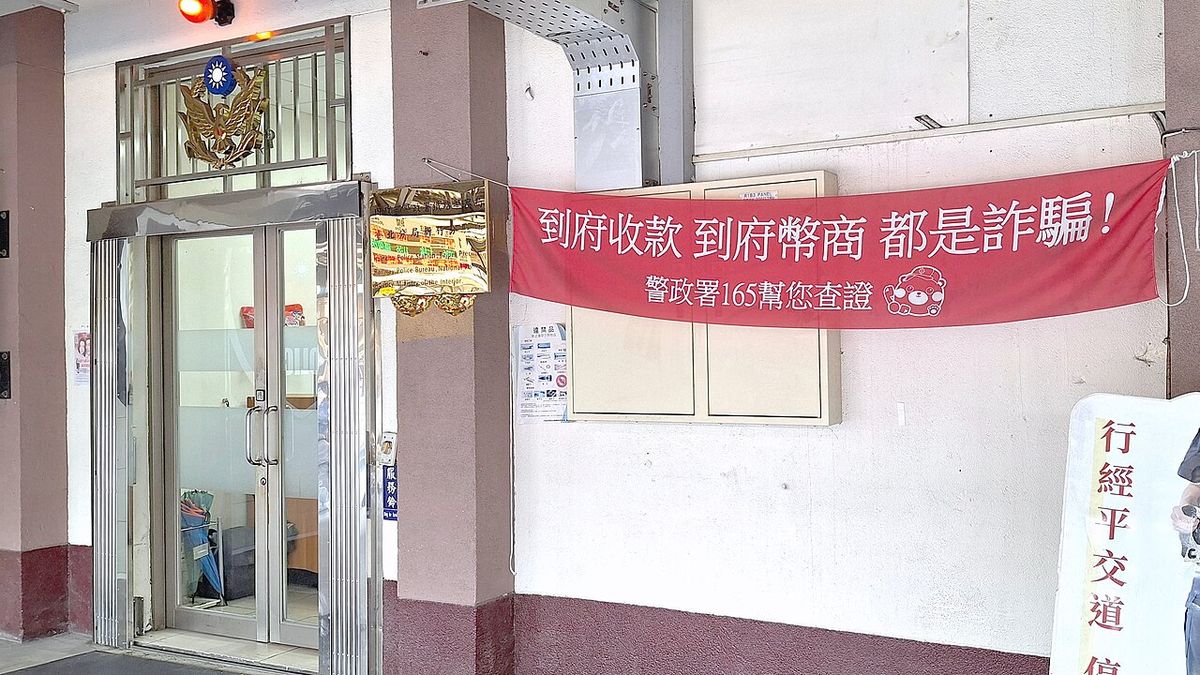
Photo: Solomon203 via Wikimedia Commons, CC BY-SA 4.0
The banner reads: "Cash pickups and crypto dealers at your door are all scams. NPA 165 will verify for you."
The most common scams in Taiwan right now
By number of cases, fake online shopping was the top category in 2025 (about 35,000 cases, roughly 20%). By money lost, fake investment wins by a mile. Here is what each one looks like in practice.
1. The "investment teacher" LINE group
It starts with a Facebook or Instagram ad: a famous businessman, a free book, a stock tips group. You get added to a LINE group full of "members" posting screenshots of huge gains, led by a "teacher" (老師) and an "assistant". After a few small wins on a slick trading app, you are encouraged to put in more. When you try to withdraw, there is suddenly a "tax" or "unlock fee". One Forumosa member described exactly this happening to a parent: a free autobiography ad, a friendly contact, an invite to a chat group, a "charity" fund, and hundreds of thousands of NT dollars gone. Rule: no real advisor recruits through LINE groups, and no real platform charges a fee to release your own money.
2. "You set up 12 installments by mistake" (解除分期付款)
Someone calls using your real name and details of something you actually bought online. They say the store accidentally set you up for 12 monthly installments, and a "bank officer" will help you cancel it. You are then walked through an ATM or online banking transfer. An AmCham Taiwan writer described losing money exactly this way. Rule: an ATM cannot cancel anything. Every ATM function is on the screen, and no store or bank will ever ask you to fix a billing error by transferring money.
3. Fake government, police or prosecutor calls
The caller says your NHI card has been used fraudulently, your Chunghwa Telecom number is linked to a crime, or your ARC is "suspended". You are transferred to a "police officer", then a "prosecutor", who says your account must be "supervised" (監管帳戶) and asks you to move money to a "safe account" or hand over your bank card. Rule: no Taiwanese agency, police officer or prosecutor will ask you to transfer money, hand over cash or cards, or keep the call secret.
4. Parcel, toll and e-invoice texts
Texts saying a parcel is stuck, an ETC highway toll of NT$37 or NT$46 is unpaid with a "NT$300 penalty" by midnight, or an e-invoice prize is waiting. The Freeway Bureau says real toll notices start with your license plate and never contain a payment link. A related trick: cash-on-delivery boxes you never ordered arriving at your 7-Eleven. Forumosa users recommend matching the order number to your actual Shopee order before paying for anything.
5. Fake buyers on Shopee, Carousell and Facebook Marketplace
You list a fridge before moving out. A "buyer" says they paid, but you need to "verify" or "activate" your account through a link or a call with "customer service". That link harvests your banking login. Rule: real buyers pay through the platform; you never need to do anything to receive money.
6. Romance and "fake friend" scams
A dating match moves you to LINE quickly, then brings up crypto or a family emergency. Or a friend's LINE account (hijacked) messages you asking you to buy game cards or receive a verification code. If a friend asks for money or a code by message, call them by voice first.
7. Job offers that turn you into a money mule
This is the one foreigners underestimate. "Easy work from home, high pay, just lend us your bank account" or "receive transfers and buy crypto for us". Your account then receives victims' money. Under Article 22 of Taiwan's Money Laundering Control Act, handing your account to others without a legitimate reason is itself an offence (a warning the first time, then up to 3 years in prison for repeat offenders), and if you knowingly help move scam money you face fraud charges. For foreigners, deportation is a real possibility.
Even innocent people get caught. A Forumosa member sold crypto on a P2P platform, received TWD that turned out to come from an investment scam victim, and had all their bank accounts frozen a month later while police investigated. Another's friend handed over cash "for someone" and later got a court summons. Lesson: never let unknown people send money into your account, and never sell crypto P2P to strangers for bank transfers.
How to spot a scam in ten seconds
Almost every scam in Taiwan has at least one of these red flags:
- Urgency: "today", "before midnight", "or your account will be frozen".
- Secrecy: "don't tell your bank", "don't tell family, it's a confidential investigation".
- A request to move money, go to an ATM, or hand over cash, cards or passbooks.
- A link in a text that does not end in gov.tw (for government) or your bank's real domain.
- Someone you never met moving the conversation to LINE.
- Guaranteed returns, or a fee to withdraw your own money.
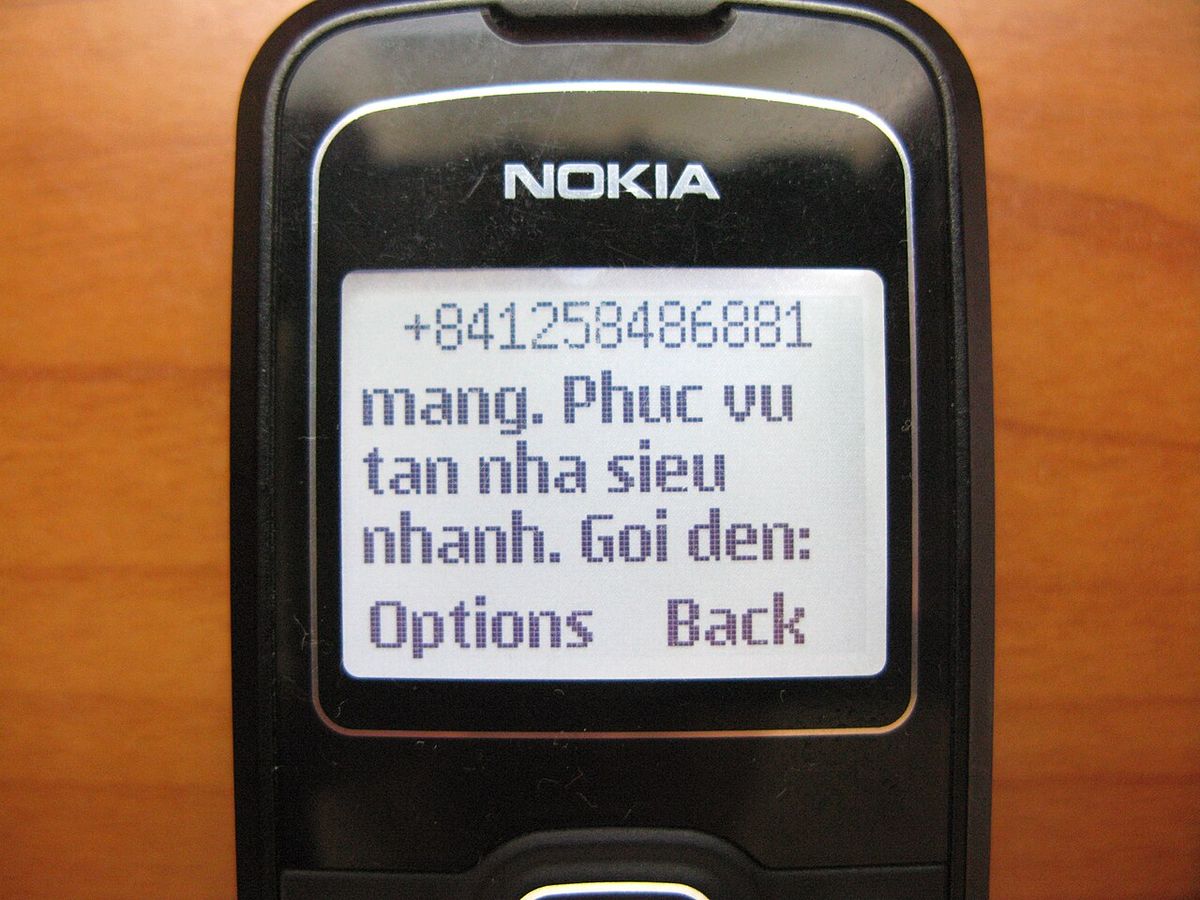
Photo: Phó Nháy via Wikimedia Commons, public domain
How to verify: 165, 111 and Whoscall
Call 165. The National Police Agency's anti-fraud hotline is free and runs 24 hours. Press 1 for telecom customer service or 2 for police. Our honest take: assume it is Mandarin first. We could not confirm a dedicated English line, so if language is a problem, call the immigration agency's 1990 hotline (English 24/7) for help, or ask a Taiwanese friend to call with you. The 165 website (165.npa.gov.tw) and the "165 全民防騙" app let you look up scam websites, LINE IDs and phone numbers, mostly in Chinese, which Google Translate handles fine.
Check for 111. Since late 2023, Taiwan's government sends official texts from the short code 111 only. The Ministry of Digital Affairs says genuine 111 messages are signed with the agency name and start with the last three digits of your phone number, and any links point to gov.tw. A "government" text from a random 09xx number or an overseas number is fake. Simple.
Install Whoscall. Our pick for every newcomer. This free app (built by a Taiwanese company, Gogolook) labels incoming calls and texts using a huge local database, so "Suspected fraud" pops up before you answer. Pair it with your phone's own spam filter.
Hang up and call back. If "your bank" calls, hang up and dial the number on the back of your card. If "the police" call, call 110 yourself. Scammers can fake caller ID, but they cannot answer the real number.
Your bank is also watching
Taiwanese banks are now required to step in. At the counter, staff will often ask why you are withdrawing a large amount in cash or wiring money to a new account, sometimes calling the police to the branch. Answer honestly: they are trying to stop exactly the scams above. Banks also delay or block transfers to accounts flagged as "warning accounts" (警示帳戶). If you are setting up banking now, our guide on opening a Taiwan bank account and getting a phone plan explains the basics, and getting a credit card in Taiwan covers card security settings.
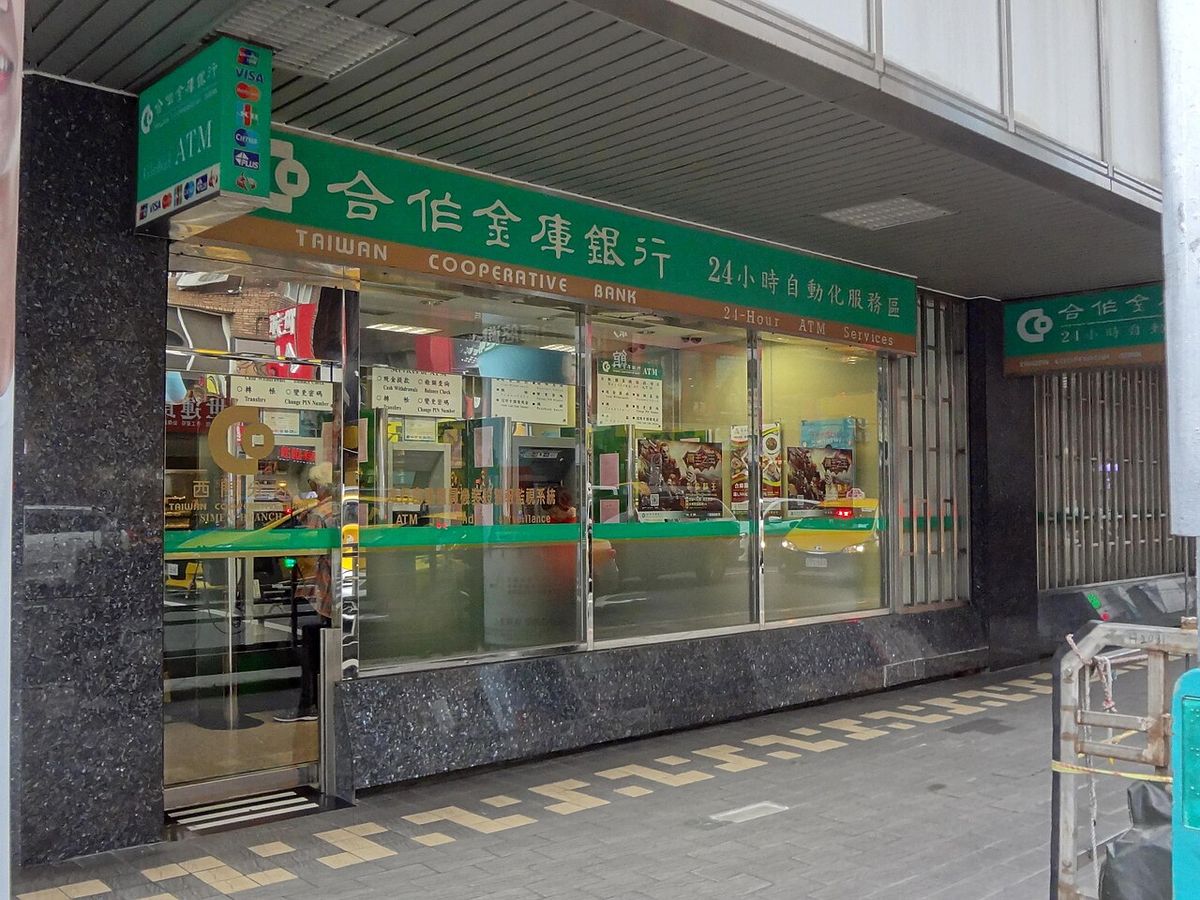
Photo: Solomon203 via Wikimedia Commons, CC BY-SA 4.0
What to do if you have been scammed
Speed matters more than anything. Money moves through mule accounts within hours.
1. Call 165 (or 110) immediately with the account number you transferred to, the amount and the time. Police can flag the receiving account as a warning account and freeze what is left.
2. Call your own bank's 24-hour line to stop cards and report the transfer.
3. Go to the nearest police station to file a formal report (報案). Ask for the 受理案件證明單 (case acceptance certificate); you need it for the bank and any recovery.
4. Screenshot everything: chats, LINE IDs, phone numbers, transfer receipts. Do not delete the conversation.
5. Change passwords and log out of LINE on other devices if your account was involved.
6. Ignore "recovery agents" who contact you promising to get your money back for a fee. That is round two of the same scam.
If you are not sure what to say at the station, our emergency numbers guide has tips on handling calls and police visits with limited Chinese.
Never do these (save this list)
- Never go to an ATM because someone on the phone told you to.
- Never lend, rent or sell your bank account, bank card, passbook or phone number, no matter the payment.
- Never hand cash to a "courier" or let anyone collect money at your door.
- Never click a payment link in a text about tolls, parcels, fines or prizes.
- Never pay a fee to withdraw your own investment.
- Never share a LINE or bank verification code with anyone, including "friends".
Once you know that no real person in Taiwan will ever ask you to move money over the phone, most of these scripts fall apart on the first sentence.