Pedestrian Safety in Taipei: How to Survive Turning Cars, Scooters and Lanes Without Sidewalks
By Raytio Ray
A pedestrian safety Taipei guide from locals: the moments that actually hurt people, crossing with turning cars, reporting bad drivers, and what to do if hit.
Traffic is the one thing almost every newcomer underestimates. The city is safe from crime, the MRT is spotless, and then a taxi turns right through your green crosswalk without slowing down. This is the pedestrian safety Taipei guide we give friends in their first week: where the real danger is, how locals actually cross, and what to do if something goes wrong.
Is Taipei really a "pedestrian hell"?
The phrase comes from a Facebook page called "Taiwan is a living hell for pedestrians," which CNN picked up in December 2022. The numbers backed it up: Taiwan was recording around 3,000 road deaths a year, more than double Japan or South Korea, and only about 42% of urban roads had sidewalks.
Things have improved. After the April 2023 law amendments, the fine for a driver not yielding at a crosswalk rose from a maximum of NT$3,600 to NT$1,200 to 6,000, and the public can now report it. From June 30, 2025, a driver who fails to yield and injures you starts at NT$18,000 plus a 1 to 2 year license suspension, and NT$36,000 plus license revocation for serious injury or death. Pedestrian deaths fell from 380 in 2023 to 366 in 2024, and total deaths have stayed under 3,000 a year since.
So: better, not fixed. On the Forumosa thread about making drivers yield (over 7,000 replies and still going in 2026), foreigners keep describing the same things: being clipped by a left-turning car while crossing legally, buses turning right into people on a green, and scooters running red lights near schools. In September 2026 a visiting Singaporean tourist was hit by a right-turning bus in Taichung. The danger is not random; it clusters in a few predictable moments.
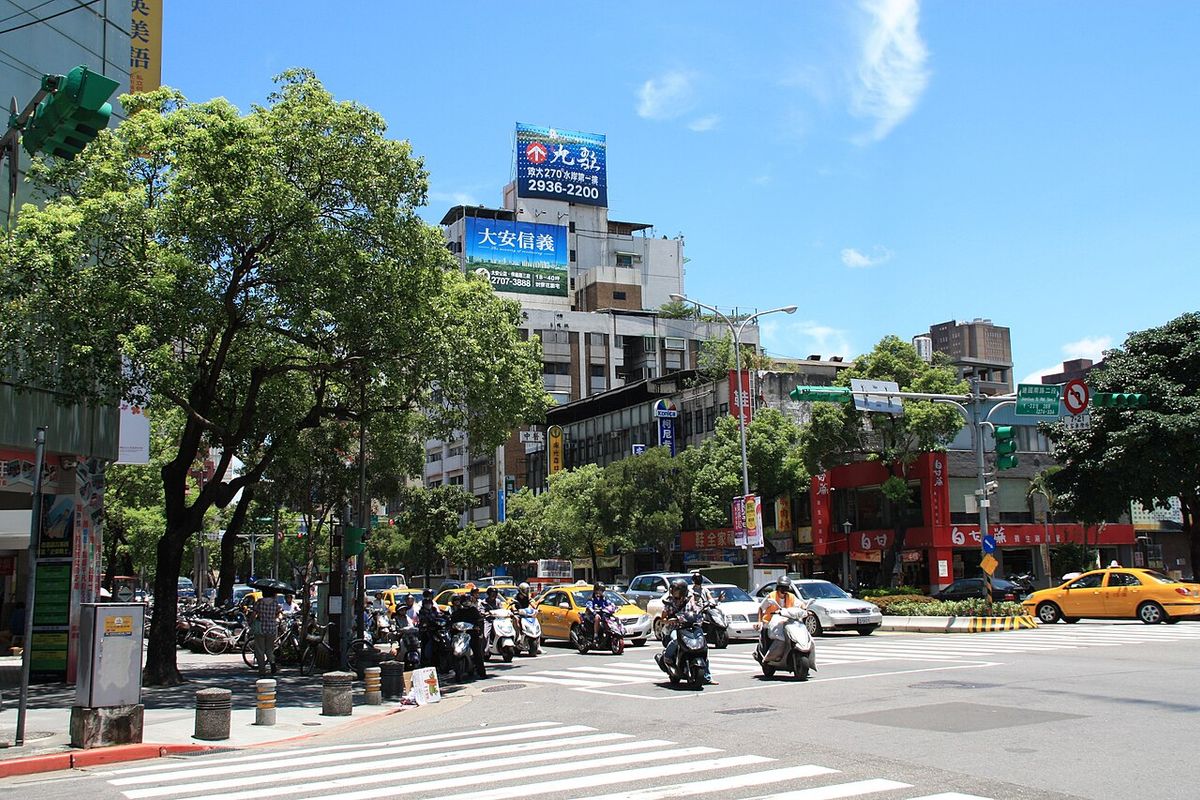
Photo: Lord Koxinga via Wikimedia Commons, CC BY-SA 3.0
The five moments that actually hurt pedestrians
1. Turning cars on your green light. This is the big one. Your walk signal is green, and so is the light for cars turning across your crosswalk. Taiwan has no right turn on red, but on green, right-turning cars and buses cut straight through the crosswalk, and left-turning cars swing in fast from the far side. Large vehicles are the worst because of blind spots. Before you step off the curb, look over your shoulder at whatever is behind you and about to turn.
2. The scooter launch. On big roads, scooters do a two-stage left turn: they wait in a painted box in front of the crosswalk, then go when the cross street turns green. Scooters at the front of the pack also tend to jump the light by a second or two. Do not start crossing on the very last flash, and do not assume the last second of red belongs to you.
3. Lanes without sidewalks. Most Taipei apartments sit on lanes (巷) and alleys (弄) where there is no sidewalk at all, just a painted white or green strip that is usually covered in parked scooters. Cars and scooters share this space with you, and delivery scooters move fast. Walk facing traffic when you can, and stay off your phone.
4. Reversing cars. In lanes, drivers back out of parking spaces and garages blind, often into people. If you see reverse lights or a car pulling out, stop and let it finish, even if you technically have the right of way.
5. Arcades and driveway crossings. The covered walkways (騎樓) in front of shops are great in rain, but they are broken up by steps, parked scooters and scooters riding through to reach a parking spot. Watch every gap between buildings: that is where scooters cross the walkway.
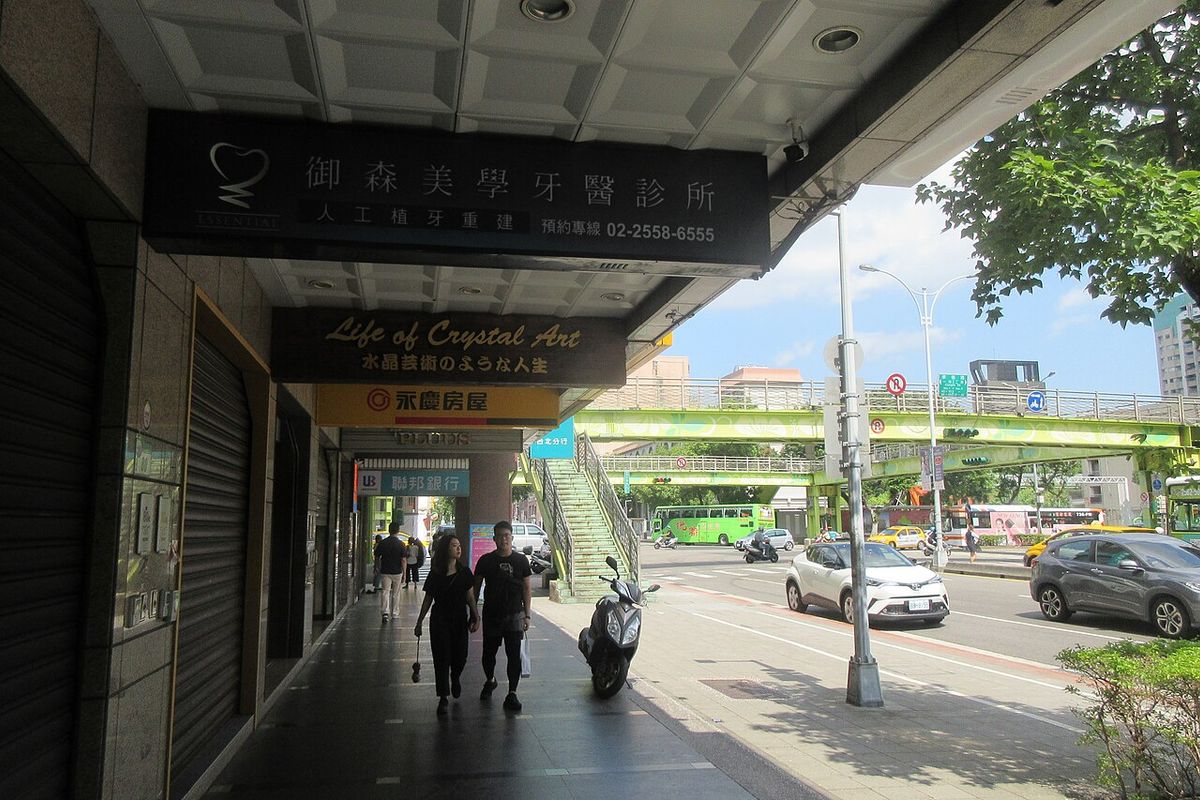
Photo: Diamo Laung Bobpuao via Wikimedia Commons, CC BY-SA 4.0
Crossing the street in Taipei like a local
Even locals cross defensively. Here is the routine:
- Use the countdown. Most crosswalks show a seconds counter. If it says 8 and you are slow, wait for the next cycle. Since March 13, 2026, stepping in on a flashing green is no longer an automatic NT$500 fine, but that does not make it safe.
- Let the light change, then count to two. Red light runners are most common in the first second.
- Look at the turning lane, not the light. The light tells you what is legal. The turning driver tells you what will happen.
- Make eye contact or a clear gesture. Raising a hand at a turning driver works surprisingly often. Never assume they have seen you.
- Cross with a group when you can. Drivers yield to a crowd far more than to one person.
- Use underpasses and footbridges on the big roads. On roads like Civic Boulevard, Zhongxiao, or Keelung Road near the expressway ramps, the pedestrian bridge or MRT underpass is worth the extra minute.
- Do not jaywalk. Besides the NT$500 fine, drivers do not expect you mid-block.
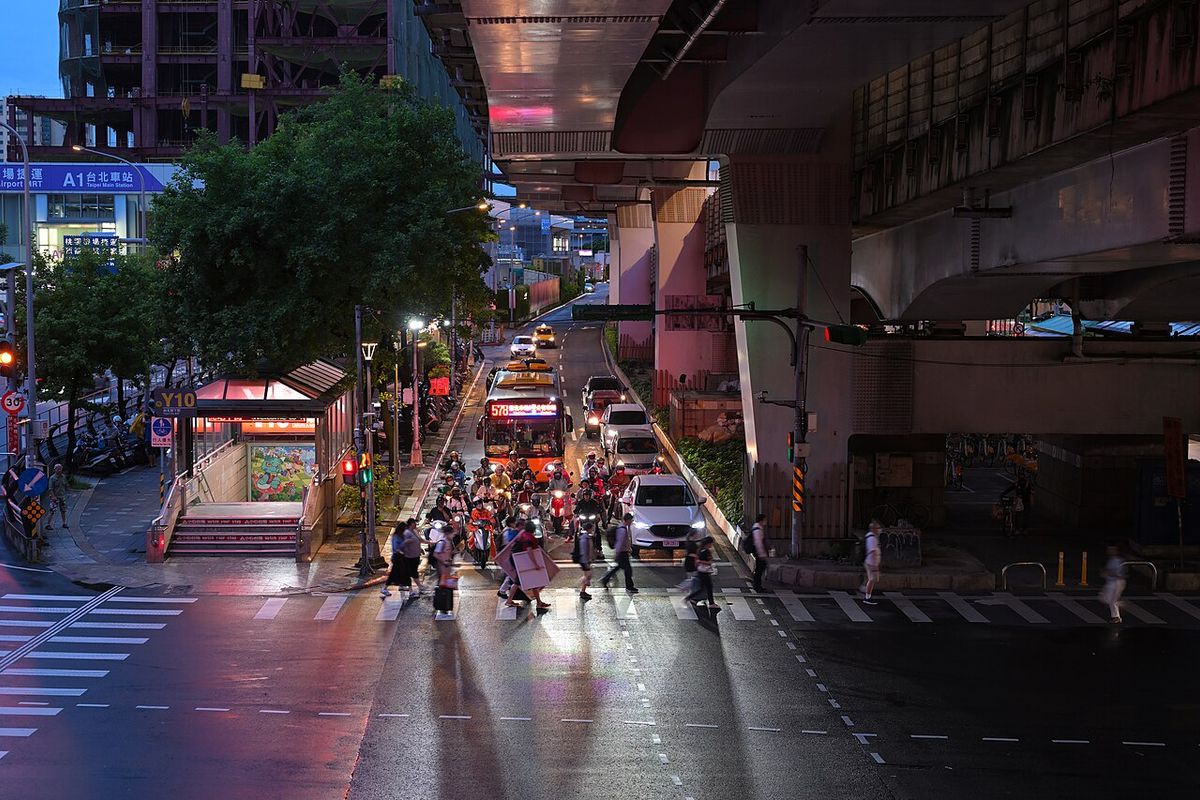
Photo: 4300streetcar via Wikimedia Commons, CC BY 4.0
Night, rain, kids and strollers
At night, wear something light or reflective if you walk lanes or riverside paths. Many lanes are poorly lit and scooters come out of nowhere. In rain, everyone's umbrella blocks their view, and braking distances get longer; cross with more margin than you think you need.
With kids or a stroller, our honest advice: plan routes around real sidewalks, not shortest distance. Arcades have steps every few shops, so a stroller ends up in the street. Wide tree-lined sidewalks like Dunhua South and North Road, Ren'ai Road and Xinyi Road are far easier, and so are park routes like Da'an Forest Park. Hold your child's hand at every lane mouth, not just at intersections, because cars turn into lanes without slowing.
Your apartment choice matters more than you think
This is the part nobody tells you before you sign a lease. You walk the last 200 meters to your door twice a day, every day, so that stretch decides most of your risk.
Our pick: an apartment on a quiet lane that is one or two minutes from a main road with a real sidewalk and a signalized crossing near the MRT. You get the quiet of a lane without walking long stretches with no sidewalk. Before you sign, walk from the MRT station to the door at night, and look for three things: a continuous sidewalk or arcade, scooter parking that leaves room to walk, and no blind garage exits right at your gate.
Neighborhoods like Minsheng Community and parts of Da'an and Xinyi are planned with wider sidewalks. Older parts of Wanhua, and dense parts of Zhonghe and Yonghe in New Taipei, have more narrow lanes and heavier scooter traffic, which is fine for a solo adult but tough with a stroller. Our comparison of the best areas to live in Taipei for foreigners covers the trade-offs area by area, and walkability is something we check for clients when we view apartments.
How to report dangerous driving
Since 2023, the public can report drivers who do not yield to pedestrians, cars parked on sidewalks or crosswalks, and drivers who fail to watch for pedestrians when turning. In Taipei you report through the police Traffic Violation Report site (臺北市交通違規檢舉專區, prsweb.tcpd.gov.tw). New Taipei and other cities have their own sites.
What you need to know:
- You have 7 days from the violation to report. After that, it is not processed.
- No anonymous reports. You give your name, phone, address and ID number. Foreign residents report with their ARC; some city systems still ask you to upload a photo of the card because the number format confuses them.
- Video wins. A phone clip or a small camera with a timestamp, showing the plate clearly, is what gets a ticket issued. The sites are in Chinese, so use your browser's translate function.
What to do if you are hit
1. Call 110 (police) and 119 if anyone is hurt. Even if you feel fine, get the police to the scene. Adrenaline hides injuries, and without a police record your claim gets much harder. Our guide to emergency numbers in Taiwan has the phrases to use.
2. Photograph everything before vehicles move: plate number, the vehicle's position, the crosswalk, the signal, your injuries. Note any shop with a camera facing the street.
3. Get the police record. Ask the officer for the case details. You can usually request the accident scene diagram from the police unit about a week later, and the preliminary fault analysis about a month after the accident.
4. See a doctor the same day, using your NHI card, and keep every receipt and diagnosis certificate (診斷證明書).
5. Claim compulsory insurance. Every car and scooter in Taiwan must carry compulsory auto liability insurance (強制險), and it pays third parties like pedestrians regardless of who was at fault: up to NT$200,000 for medical costs, up to NT$2 million for disability, and NT$2 million for death. If the driver flees or has no insurance, the Special Compensation Fund pays the same amounts, and you can apply at any property insurance company. There is a time limit (two years), so do not sit on it.
The pedestrian safety Taipei checklist we give friends
- Treat every green crosswalk as "green, with turning traffic."
- Look behind you before stepping off the curb.
- Never cross on the last flashing seconds.
- In lanes, walk facing traffic and stop for reverse lights.
- Choose your apartment by the last 200 meters, not just the rent.
- Film it, report it within 7 days, and always call the police after any collision.
If you are newer to scooters yourself, read our guide to driving and scooters in Taiwan as a foreigner too.