Lost Your Job in Taiwan? Your ARC, Severance, Pension and Next Steps (2026)
By Raytio Ray
Lost job in Taiwan? ARC status, the job-seeking extension, severance, final pay, the 2026 pension change, unemployment rules and a first-week checklist.
Searching "lost job in Taiwan ARC" at 2 a.m.? Here is the short answer: if you have lost your job in Taiwan, your ARC is the first thing to protect, and the clock starts sooner than most people expect. For most foreign professionals, the residence permit exists because of the job, so when the job ends, the reason for your residence ends too. The good news: Taiwan has a legal path to stay and look for work, the labor law on severance is clear, and the 2026 changes to the foreign talent law improved pension and unemployment rules for some foreigners. This guide walks through what happens, what you are owed, and exactly what to do in the first week.
This is general information, not legal advice. If money or your residency is on the line, call the free 1955 hotline (more on that below) before you sign anything.
Lost job in Taiwan, ARC still valid? What actually happens
Here is the chain of events for a typical work-permit ARC holder:
1. Your employer reports it. Under Article 56 of the Employment Service Act, the employer must notify the labor authority, the National Immigration Agency (NIA) and the police in writing within 3 days after the employment ends.
2. Your work permit ends. It was tied to that employer. You cannot legally work for anyone else until a new permit is approved.
3. Your ARC becomes revocable. Article 31 of the Immigration Act says that when the reason for residence disappears, the NIA revokes the residence permit. There are exceptions, and two matter here: you can be allowed to stay if you are in a labor dispute with your Taiwanese employer that is going through legal proceedings, or if you are still being treated for a work injury.
Do not rely on any "grace period" you read about online: the law sets no fixed number of days for professionals. Our advice: act as if you have days, not weeks.

Photo: Yu tptw via Wikimedia Commons, CC BY-SA 4.0
Your four realistic options
Option 1: A new employer applies for your work permit (best if you have an offer)
If you already have an offer, the new employer applies to the Ministry of Labor for a new work permit, and you then register the change of employer with the NIA. You cannot start work until the permit is approved. The risk is timing: if your old employer's report reaches the NIA first and your ARC is cancelled, you may end up applying from outside Taiwan.
Option 2: The job-seeking ARC extension (our pick for most people)
Article 17 of the Act for the Recruitment and Employment of Foreign Professionals lets foreign professionals who still need to stay apply to the NIA for an extension of residence: 6 months, plus one more extension if needed, up to 1 year in total. The NIA's own guidelines list the fee as NT$1,000 and are clear that you cannot work during the extension unless you get a new Ministry of Labor permit.
Forumosa members who have done this after leaving a job (posts from 2014 and 2020) describe bringing a passport photo, the NIA application form, a short letter explaining why, and the 離職證明書 (certificate of employment termination) from the employer. They also report that the NIA would not process it until the last working day had passed. One member noted that a job-seeking ARC kept their continuous residence intact for a later APRC application.
Why we'd do this even if you have a promising interview: it gives you legal status while the new employer's paperwork crawls along, and it protects your APRC clock. Gaps are what hurt you.
Option 3: Switch to an Employment Gold Card
The Gold Card is an open work permit, residence permit and re-entry permit in one card, not tied to any employer. If you qualify (often through past salary level or professional achievements), it is the most flexible place to land. It is not an instant fix: review takes time, so apply for the job-seeking extension first and the Gold Card in parallel. We cover eligibility in the Gold Card and other ways to get residency.
Option 4: Leave Taiwan cleanly
Sometimes leaving is the right call. If you go, do it in order: settle your lease, close or keep your bank account deliberately, and file your income tax before you board. A resident who leaves for good has to settle tax before departure, which we explain in filing income tax in Taiwan as a foreigner. If you want to come back to look for work later, Article 13 of the same talent law also offers a separate job-seeking visa from abroad (total stay up to 6 months, with an annual quota).
If you are on an ARC through marriage to a Taiwanese citizen, or you hold an APRC, none of the above applies the same way: your residence is not tied to the job, and you can work without a separate permit.
Laid off vs quitting: why it matters
This one distinction decides your money.
If your employer lays you off for business reasons (closing, losses, downsizing, a change in business, or claiming you cannot do the job), the Labor Standards Act requires:
- Your length of service: 3 months to under 1 year | Notice the employer must give: 10 days
- Your length of service: 1 year to under 3 years | Notice the employer must give: 20 days
- Your length of service: 3 years or more | Notice the employer must give: 30 days
If they skip the notice, they owe you wages for the notice period instead. During the notice period you may take paid time off to job hunt, up to two working days per week.
If you quit voluntarily, you get no severance. You should also give the same notice periods (10, 20 or 30 days) for an open-ended contract.
The important exception: quitting because the employer broke the rules. Under Article 14 of the Labor Standards Act you can leave without notice, and still get severance, if the employer does not pay wages as agreed, violates the contract or labor law in a way that harms you, or mistreats you. Generally you must act within 30 days of finding out. If your boss is pushing you to "just resign" instead of laying you off, that is usually about avoiding severance. Don't sign a resignation letter before you have called 1955.
If you are fired for serious misconduct (Article 12, for example three days of unexplained absence), there is no notice and no severance.
Severance pay in Taiwan for foreigners, and the 2026 pension change
Severance depends on which pension system you are under, and this changed for foreign professionals in 2026.
- Old system (Labor Standards Act): one month's average wage per year of service, pro-rated for partial years.
- New system (Labor Pension Act): half a month's average wage per year of service, capped at 6 months, paid within 30 days.
Until recently, most foreign professionals on a regular ARC were stuck in the old system. The amended Act for the Recruitment and Employment of Foreign Professionals (passed August 29, 2025, in force January 1, 2026) changed that: Article 24 now puts foreign professionals doing professional work under the Labor Pension Act, where the employer contributes at least 6% of your monthly wage to a personal account. People already employed before the change could tell their employer in writing within 6 months that they wanted to stay in the old system. In practice, if you have years under both systems, the years before the switch are generally calculated under the old formula. Ask your HR department for the breakdown in writing.
Can you take the 6% pension money with you? Not early, as far as we can tell from the current law. The Labor Pension Act lets you claim at age 60 (lump sum if you have under 15 years of contributions), with early access only for serious disability. We found no clause that releases the money just because a foreigner leaves Taiwan. The account stays yours and moves with you between employers; you claim it later from the Bureau of Labor Insurance.
Labor insurance (勞保) coverage ends on the day your employer withdraws you. The old-age benefit can only be claimed at the statutory age (rising to 65), so a few years of contributions will not turn into cash when you leave.
Final pay: what you should receive
Check that your last payment includes:
- Wages up to your last working day
- Unused annual leave, paid out in cash (Article 38 of the Labor Standards Act)
- Notice-period wages, if you were laid off without proper notice
- Severance, within 30 days, if you were laid off or left under Article 14
You can also ask for a service certificate (服務證明書), and the employer cannot refuse (Article 19). Ask for the 離職證明書 at the same time, because the NIA, a new employer and any unemployment claim will want it.
Can foreigners get unemployment benefits in Taiwan?
Most foreigners on a work-permit ARC cannot. Taiwan's Employment Insurance Act covers Taiwanese nationals and foreigners married to a Taiwanese citizen with household registration who hold a residence permit. The 2026 talent law amendment added one more group: foreign professionals with an APRC who are employed in Taiwan (Article 25).
If you are covered, the rules are: you must have left involuntarily, have at least one year of insurance in the three years before, and register as a job seeker at a public employment service center within two years of leaving. The benefit is 60% of your average insured salary for up to 6 months (9 months if you are 45 or older).
The 1955 hotline: call it before you sign anything
1955 is the Ministry of Labor's consultation and complaint hotline. It runs 24 hours a day, every day of the year, the call is free from mobiles and landlines, and English is supported. It is set up mainly with migrant workers in mind, but white-collar foreigners can use it to check whether a layoff, a "please resign" request or a missing severance payment is legal. If you need to push further, the next step is mediation through your city's labor department (in Taipei, the Department of Labor), which is free.
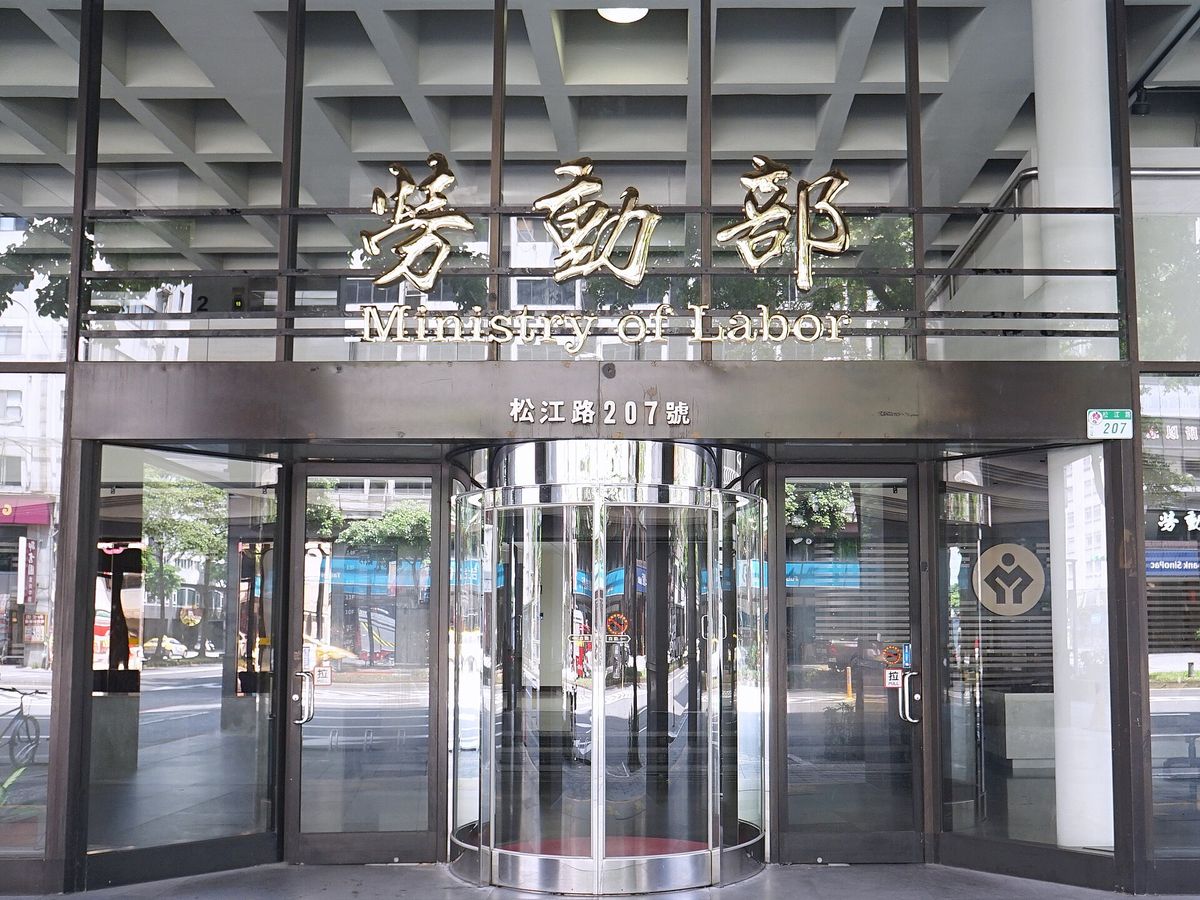
Photo: Solomon203 via Wikimedia Commons, CC BY-SA 4.0
The week you lose your job: a checklist
Day 1
1. Don't sign a resignation letter or "mutual agreement" until you understand what you lose by signing.
2. Ask HR in writing (email is fine) for your last day, the reason for termination, a severance calculation, unused leave days, and the 離職證明書.
3. Photograph your ARC, contract, recent payslips and your labor insurance and pension records.
Days 2 to 3
4. Call 1955 if anything looks off.
5. Decide your route: new employer, job-seeking extension, Gold Card or leaving. If unsure, plan for the job-seeking extension.
6. If you have an offer, ask the new employer to file the work permit now, not "after you join".
Days 3 to 7
7. After your last working day, go to the NIA service center (or use the online platform) with your passport, ARC, photo, 離職證明書 and the fee for the job-seeking extension.
8. Sort out health insurance. Your NHI coverage moves when the job ends, usually to a spouse's employer as a dependent or to your local district office, and premiums keep running. See NHI for foreigners.
9. Check your bank account still works. Some banks restrict accounts when an ARC is about to expire; update them when you get a new card.
10. Look at your lease. If you might leave, read the early-termination clause now, not the week you fly. Our guide to what happens when your lease ends covers notice and getting the deposit back.
Within 30 days
11. Confirm severance and final wages actually arrived. If not, file for mediation with the labor department.
12. If you start a new job, register the change of employer with the NIA.
In Taiwan the real danger is not the job loss itself, it is losing your legal status by waiting. Get the paperwork moving in the first week.
If you need a cheaper place fast
If staying means cutting costs, a smaller or cheaper apartment is often the biggest lever. TRA's home search can help you find one quickly: we view places with you in person, negotiate in Chinese and go through the contract before you sign, usually within a week or two. If you're handing back your current flat, our move-out cleaning helps with getting the deposit back. We quote individually.