Noise in Your Taipei Apartment: The Rules, Who to Call and What Actually Works
By Raytio Ray
Noise complaint Taipei guide: legal renovation hours, when to call 1999 or 110, a polite note for noisy neighbors, and cheap soundproofing for renters.
Ask foreigners on the Forumosa expat forum what they like least about Taiwan and noise comes up again and again. Think of this as your noise complaint Taipei playbook. Before you call anyone, it helps to know which kind of noise you're dealing with, because the city splits it between two different authorities, and calling the wrong one just wastes your evening. Here's how the rules actually work, who to call for what, and the order we'd try things in.
What's keeping you up (you're not alone)
Reading through years of expat threads, the same culprits keep appearing:
- Renovation next door or upstairs: electric drills and hammering, often starting right at 8am.
- Neighbors above: footsteps, chairs dragged across tile floors, kids running, the mysterious marble-dropping sound at midnight.
- Machines: washing machines spinning at 11pm, rooftop water pumps kicking on every few hours.
- Temple and folk events: festivals, firecrackers, and funeral tents with amplified music that can run for days.
- Street life: modified scooters revving at 6am, barking dogs, home karaoke, the garbage truck music (that one you just learn to love; see our trash day guide).
Tile floors and concrete walls carry impact noise well, so footsteps and furniture are the most common complaint in apartment buildings. Unfortunately that's also the hardest kind to get anyone official to act on.
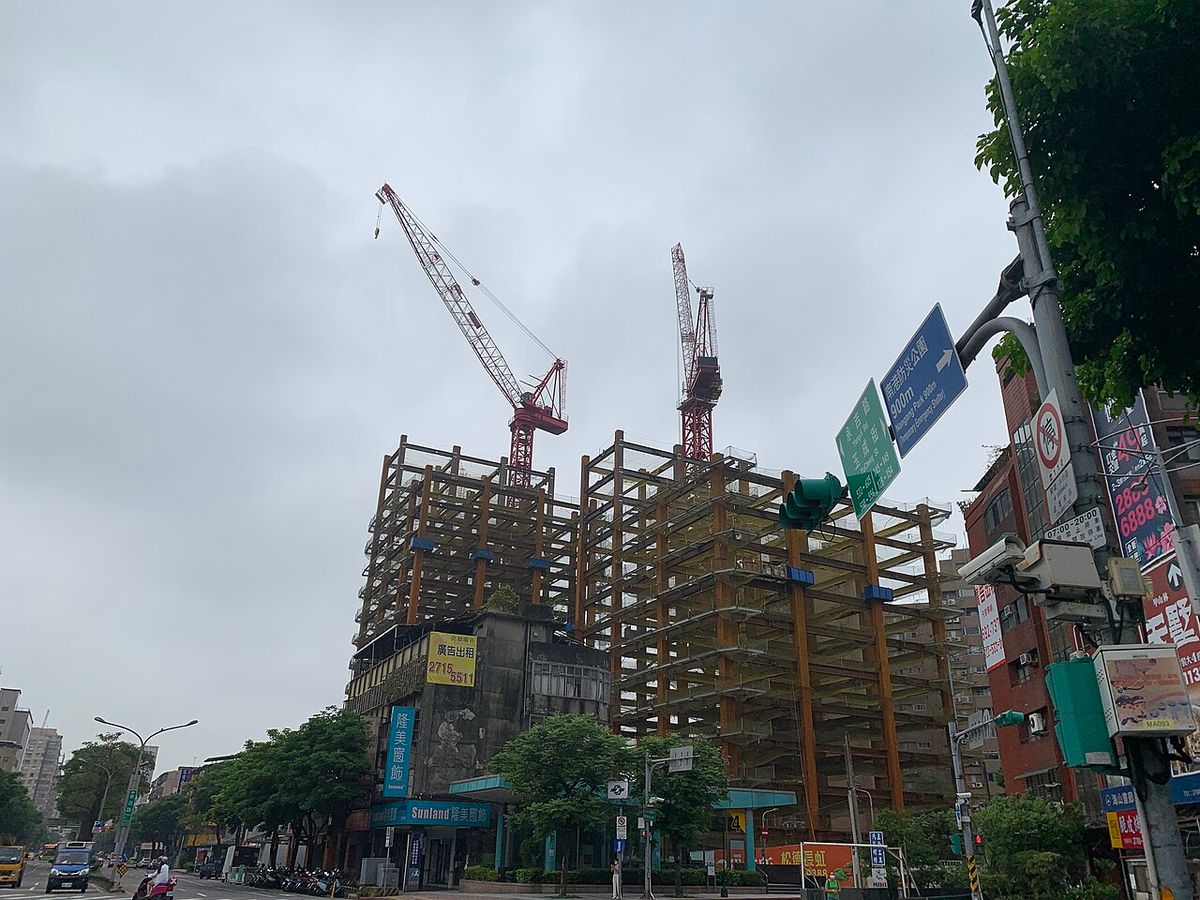
Photo: Alika113 via Wikimedia Commons, CC BY-SA 4.0
Taipei renovation noise hours: what the law says
Taipei's Department of Environmental Protection last updated its quiet-hours announcement in September 2024. Inside the city's noise control zones (which cover basically everywhere people live), using power tools or hand tools for renovation in homes and apartment buildings is not allowed:
- Weekdays: 10pm to 8am
- Weekends and public holidays: 12pm to 2pm, and 6pm to 8am
The same windows apply to construction sites for drilling, hammering, sawing, grinding and loading materials. Exceptions exist for emergency repairs and continuous jobs like pile driving, which need government approval.
The surprise for most newcomers: weekend renovation is legal in Taipei outside those windows. A drill at 10am on Saturday is annoying but not illegal. A drill at 9pm on Sunday is.
The same announcement bans fireworks and amplified temple, wedding or funeral events between 10pm and 8am, except on major festivals (Lunar New Year, Lantern Festival, Dragon Boat, Ghost Month, Mid-Autumn, National Day and New Year's Eve). Non-commercial karaoke is also banned 10pm to 8am, plus noon to 2pm on holidays. Under the Noise Control Act (噪音管制法, Article 23), breaking these rules carries a fine of NT$3,000 to NT$30,000, and repeat offences can be fined again.
Your building can be stricter. Under the Condominium Management Act (公寓大廈管理條例, Article 16), residents must not create noise or vibration that disturbs others, and most managed buildings have bylaws (規約) with their own renovation rules, often weekday daytime only. Ask your guard for the building's 裝修規定 (zhuāngxiū guīdìng, renovation rules). If a neighbor ignores the management committee, the city can fine them NT$3,000 to NT$15,000 (Article 47).
Noise complaint Taipei: when to call 1999 vs 110
This is the part most people get wrong. Taiwan's Noise Control Act gives measurable, continuous noise to the environmental authorities and intermittent noise made by people to the police.
Call 1999 (Taipei Citizen Hotline) for: construction and renovation outside legal hours, noisy shops, restaurant exhaust fans, bars, commercial karaoke, machinery. 1999 is free and 24 hours, and it dispatches the DEP's inspection team, who can measure the noise and issue an improvement notice. You can also reach the DEP directly at 02-2720-8889. Be realistic: inspectors often arrive after the noise stops, and the first result is usually a warning with a deadline, not an instant fine. Multiple complaints build the case.
Call 110 (police) for: a party at 1am, shouting, a neighbor's loud music, banging at night. Police handle this under the Social Order Maintenance Act (社會秩序維護法), Article 72, which was amended to raise the maximum fine from NT$6,000 to NT$10,000 for making noise or late-night commotion that disturbs public peace. The key words in the law are "不聽禁止": the person has to ignore an order to stop. So in practice the officers knock, tell them to keep it down, and only fine repeat offenders. That's usually enough.
Language: 1999 has offered English interpretation since 2015, but expect a Mandarin menu first. If you're stuck, the national foreigner hotline 1990 answers in English 24 hours a day and can help you work out what to say. For 110, have your address written in Chinese ready to read out.
Footsteps and furniture dragging are the gray zone. They're too intermittent for the DEP and rarely bad enough for police. This is where talking to people beats calling anyone.

Photo: Kenny Mori via Wikimedia Commons, CC BY-SA 2.0
Our escalation ladder
Here's the order we'd actually go in. Skipping steps tends to backfire in Taiwan, where neighbors remember who called the police on them.
1. Figure out the source and the pattern. Note times for a week. Is it really the unit above, or a pump in the wall? Is it every night or one party?
2. Talk to the guard or building manager (管理員, guǎnlǐyuán). In a managed building this is the most effective step. The guard knows who's renovating, can check the permit hours, and can pass on a complaint without you being "the foreigner who complained".
3. Leave a polite note. Face matters here. A friendly note gets better results than a knock at midnight. Something like:
Note template (tape it to their door or give it to the guard)
您好,我是 X 樓的住戶。最近晚上十一點以後常聽到拖椅子的聲音,影響睡眠。方便的話,可以在椅腳貼上防噪腳套嗎?謝謝您的體諒!
English: "Hello, I'm your neighbor on floor X. Recently after 11pm we often hear chairs being dragged, and it affects our sleep. If possible, could you put felt pads on the chair legs? Thank you for understanding!"
If you'd rather say it in person, one line covers it: "不好意思,晚上有點吵,可以小聲一點嗎?" (Bù hǎoyìsi, wǎnshàng yǒudiǎn chǎo, kěyǐ xiǎoshēng yìdiǎn ma? Sorry, it's a bit loud at night, could you keep it down a little?) Bringing a small gift of fruit doesn't hurt either.
4. Tell your landlord. If the source is in the same building, your landlord or their agent may know the other owner and can raise it owner to owner.
5. Call the right authority (1999 for construction and commercial noise, 110 for night disturbances). Use it for genuine violations, not as an opening move.
6. Move. Honestly, for a temple next door or a night market downstairs, no complaint will fix it. Don't renew the lease.
Soundproofing a rental in Taiwan without losing your deposit
You can't rip out walls, but you can cut a surprising amount of noise:
- Earplugs: our pick is foam earplugs like 3M or Moldex, sold at Watsons and Cosmed for around NT$100 to NT$200 a box. Cheapest, most effective fix for sleep.
- White noise: a fan, an air purifier, or a white noise machine from momo or PChome. Masks footsteps and scooters well.
- Heavy blackout curtains: IKEA and Nitori sell thick ones that soften street noise. Bonus: they help in summer heat.
- Door and window seals: self-adhesive foam strips and a door draft stopper (Daiso, Nitori, hardware shops) block hallway noise and elevator chatter. They peel off cleanly at move-out.
- Rugs: they mostly help your downstairs neighbor, but also cut echo in tiled rooms.
- Move your bed: put it against the wall farthest from the street or the noisy unit.
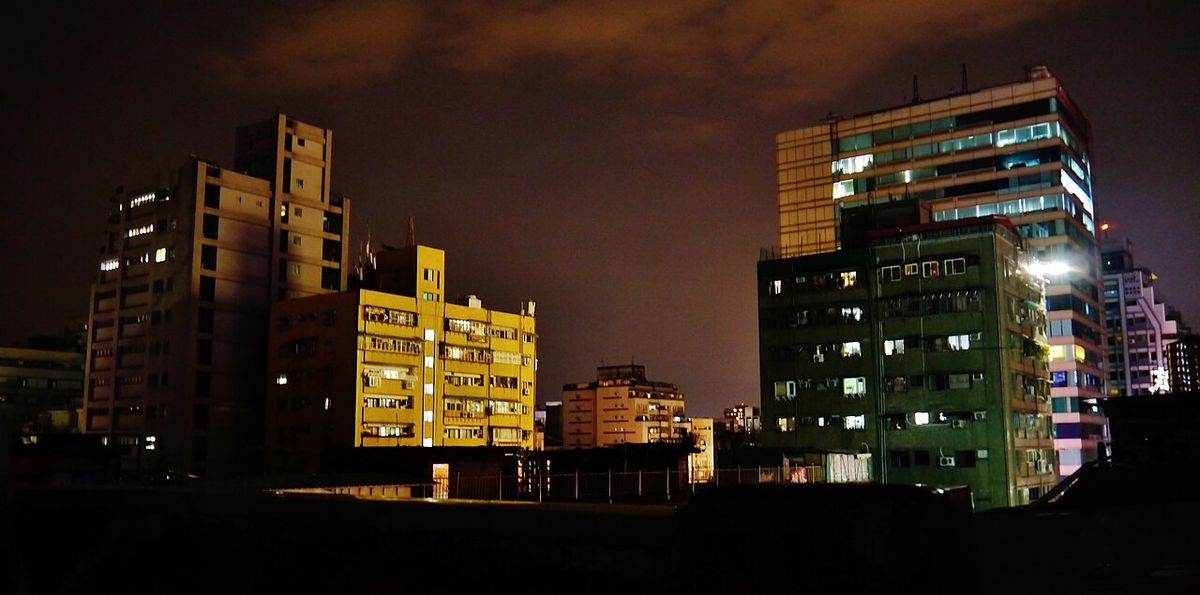
Photo: Zairon via Wikimedia Commons, CC BY-SA 4.0
Choosing a quiet apartment in Taipei next time
The best soundproofing is choosing well. Our rules of thumb:
- Go up and back. A higher floor facing a lane or courtyard, not the main road. Scooter noise drops fast after the 5th floor or so.
- Avoid what's downstairs and next door: restaurants (exhaust fans, early deliveries), temples and shrines (festivals, firecrackers), night markets, bars, KTVs, and scooter repair shops.
- Look for construction sites nearby. An empty lot or a building wrapped in scaffolding means months of drilling.
- Check the windows. Aluminum windows with double glazing or a second inner frame (氣密窗, qìmì chuāng, airtight windows) make a huge difference.
- Visit at night and on a weekend before you sign. Stand in the bedroom with the windows shut for five minutes. Our apartment viewing checklist covers what else to test while you're there.
- Ask the guard, not the agent: "最近有人在裝修嗎?" (Zuìjìn yǒu rén zài zhuāngxiū ma? Is anyone renovating lately?)
Noise in Taipei is part of the deal, but the right building, a good relationship with the guard and a box of earplugs will get you most of the way to a decent night's sleep.
How TRA screens for noise when you move
If your current place is too loud to fix and you're planning to move, noise is one of the things we check for you at every viewing with TRA's home search:
- Time of day. We schedule or repeat viewings in the evening when a unit is a real contender, because a flat that's quiet at 2pm can be a different place at 10pm.
- Floor and orientation. We favor higher floors facing a lane or courtyard and flag units that face a main road, a bus stop or a scooter-heavy intersection.
- What's around it. We look for scaffolding, empty lots and renovation notices in the building, plus restaurants, temples, bars and KTVs downstairs or next door.
- Asking the people who know. We ask the guard, the management office and, when we can, neighbors in Chinese whether anyone is renovating, whether there's construction planned nearby and what the building is like at night.
If that sounds useful, get in touch here and tell us what kept you up at your current place.