Can You Drink Tap Water in Taiwan? Is It Safe, and Do You Need a Water Filter?
By Raytio Ray
Taiwan tap water leaves the plant safe to drink, but your building's tank and pipes decide what reaches your glass. What locals do, and filter vs bottled costs.
The short answer
Taiwan tap water is safe when it leaves the treatment plant. In Taipei, the city's water department tests it for up to 141 items, more than double the 68 in the national standard, and says plainly that it is safe to drink. The catch is the last 50 metres: in most apartment buildings, water goes into a rooftop or basement tank first and then runs through the building's own pipes, which belong to the owner, not the city. That is why very few Taiwanese households drink straight from the kitchen tap. They boil it, filter it or buy it.
So: drink freely from public drinking fountains and in newer buildings with a cleaned tank, boil or filter at home, and don't spend your first year hauling bottles from 7-Eleven. If you are staying a year or more, an under-sink filter is what we recommend, and the numbers below show why.
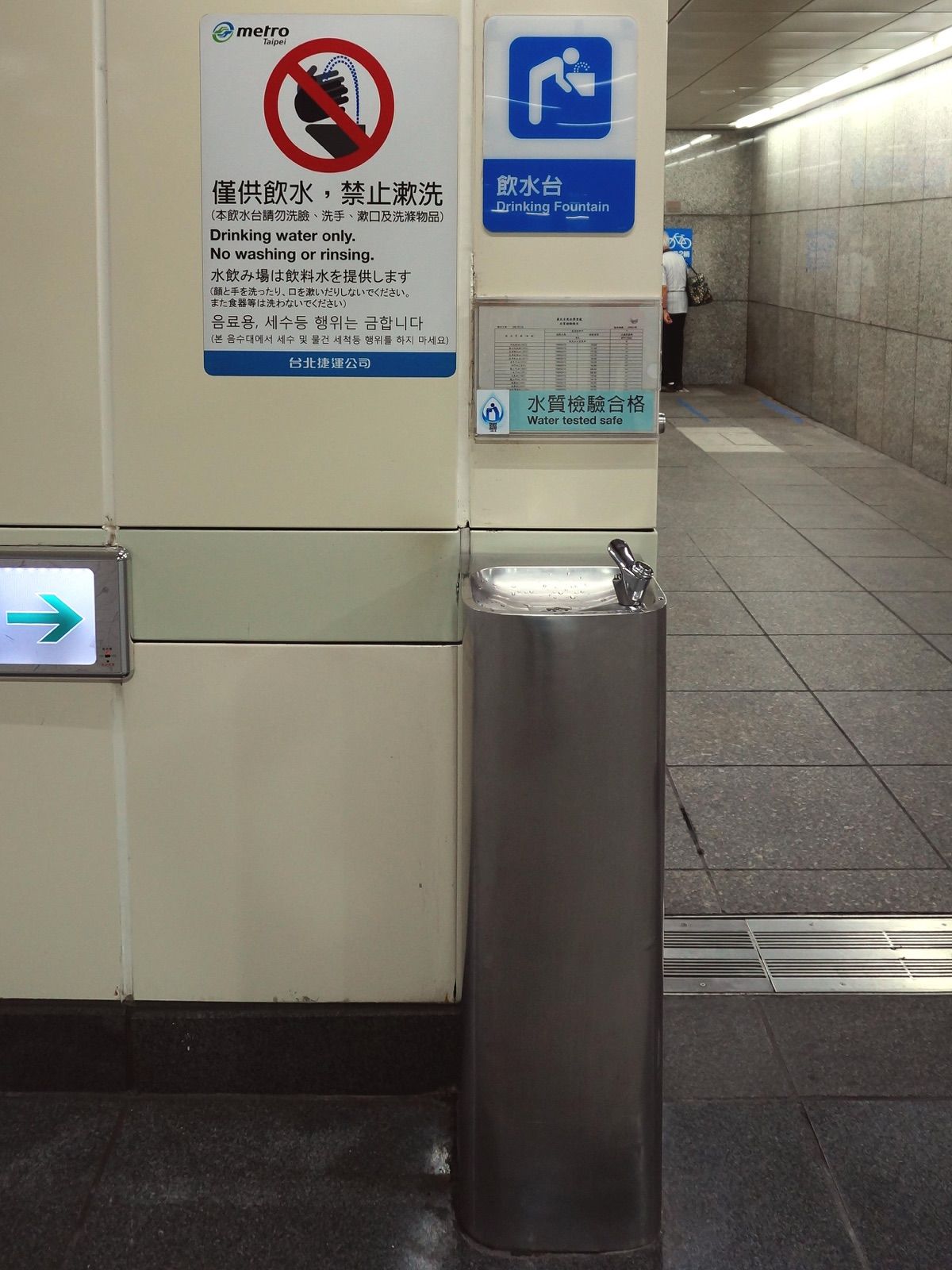
Photo: Solomon203 via Wikimedia Commons, CC BY-SA 4.0
Is Taiwan tap water safe at the source?
Yes. The figures are public:
- Taipei Water Department supplies Taipei City plus Sanchong, Zhonghe, Yonghe and Xindian in New Taipei. It tests up to 141 items, runs 95 monitoring stations from the reservoir to customer taps, and calls its water "definitely safe for drinking".
- On its own comparison table, Taipei's tap water shows lead, arsenic and cadmium below the detection limit and turbidity at 0.10 NTU, against a national limit of 2.
- The national Drinking Water Quality Standards (飲用水水質標準), set by the Ministry of Environment, cap lead at 0.01 mg/L, the same as the WHO guideline.
- Outside Taipei Water's area, including much of New Taipei and the rest of the country, the supplier is Taiwan Water Corporation, under the same national standard.
The city is confident enough that it has built more than 700 public drinking fountains (直飲台) in parks, night markets, trailheads and MRT stations, each with a QR code that shows its latest water test and cleaning log. There is a map of all of them. Refill your bottle there without a second thought.
Can you drink tap water in Taipei at home?
This is where it depends on your building, not the city.
The rooftop water tank (水塔)
Most apartment buildings pump city water into a storage tank, often on the roof, sometimes a concrete cistern in the basement, and then feed it down to each flat. A tank that is cleaned regularly is fine. The common advice is every six months for rooftop tanks, and Taipei Water keeps a list of recommended tank cleaning companies. Some buildings do this like clockwork and post the cleaning certificate by the elevator. Others don't, and as a tenant you usually have no idea.
Taipei Water will even test a sample of your tap water at its customer service centre on Changxing Street in Da'an (pH, residual chlorine, turbidity, dissolved solids and ammonia), but it says it does not accept samples from tanks that were not cleaned by a certified company. That tells you where they think the risk is.
The building's pipes
The pipes inside the building are the owner's responsibility. In a 30 or 40 year old walk-up, they may be original. You will sometimes see rust-coloured water after the water has been off, or after street works.
The chlorine taste
City water carries free chlorine to keep it safe on the way to you; the standard allows 0.2 to 1.0 mg/L, and up to 3.0 when heavy rain makes the source water muddy. It is harmless, but many people dislike the taste, especially in tea and coffee. Boiling or a carbon filter removes it. After a big storm it is often stronger; see our guide to typhoon days in Taiwan.
Our rule of thumb: in a newer elevator building with a management office that can show you a recent tank cleaning record, tap water is fine to drink. In an older walk-up where nobody knows when the tank was last cleaned, boil or filter it. Tap water is fine everywhere for brushing your teeth, washing vegetables and cooking pasta.
When the water goes off or comes back brown
Every so often you will find a notice in the lobby or on the elevator door: the water will be off on a certain day for pipe work or a tank cleaning. Fill a few bottles and a pot the night before. When the water comes back, it often runs cloudy, white with tiny air bubbles, or slightly brown with rust for the first minute. Air bubbles clear on their own in a glass. For anything coloured, run the cold tap for a few minutes before you drink, cook or run a filter, so the sediment does not clog your cartridges. If brown water keeps coming back in a building that otherwise looks fine, tell your landlord: it usually means the tank or pipes are overdue for attention.
What locals actually do
- Boil it. The traditional approach. Many homes have an electric hot water pot (熱水瓶) that boils and keeps water hot all day, handy for tea and instant noodles.
- A water dispenser (飲水機) with a filter. Standard in offices and very common in homes, with hot, warm and cold taps.
- An under-sink filter (淨水器). A small dedicated faucet next to the main tap, fed through a stack of filter cartridges in the cabinet below.
- Bottled water. Mostly for outings, or for people who have not set anything else up yet.
Bottled water vs a water filter: what you really pay
A common habit among new arrivals is the convenience store run: two big bottles every few days, carried home by hand. It feels cheap. It is not.
A large bottle at a convenience store usually costs somewhere between NT$20 and NT$40 depending on brand and size. For one person buying two big bottles every three days:
- About 20 bottles a month
- Roughly NT$400 to NT$800 a month
- Roughly NT$5,000 to NT$10,000 a year
Compare that with the 5-stage under-sink system we install, detailed in our water filter installation guide:
- : Year 1 | Bottled water (1 person): NT$5,000 to NT$10,000 | Under-sink filter: One-off system and installation cost, quoted by model and your kitchen setup
- : Each year after | Bottled water (1 person): NT$5,000 to NT$10,000 | Under-sink filter: Replacement filters only, priced by model
- : Carrying | Bottled water (1 person): Several heavy trips a week | Under-sink filter: None
- : Plastic | Bottled water (1 person): Hundreds of bottles a year for recycling day | Under-sink filter: None
For one person, the filter usually pays for itself within a few months. For a couple or a family, or if you also cook and make coffee with bottled water, it pays off even faster. And that ignores the things nobody budgets for: hauling bottles up four flights in a walk-up, running out at midnight, and rinsing a mountain of bottles for trash day. Taipei Water says each of its public fountains saves around 20,000 single-use bottles a year; your kitchen tap can do the same for your household.
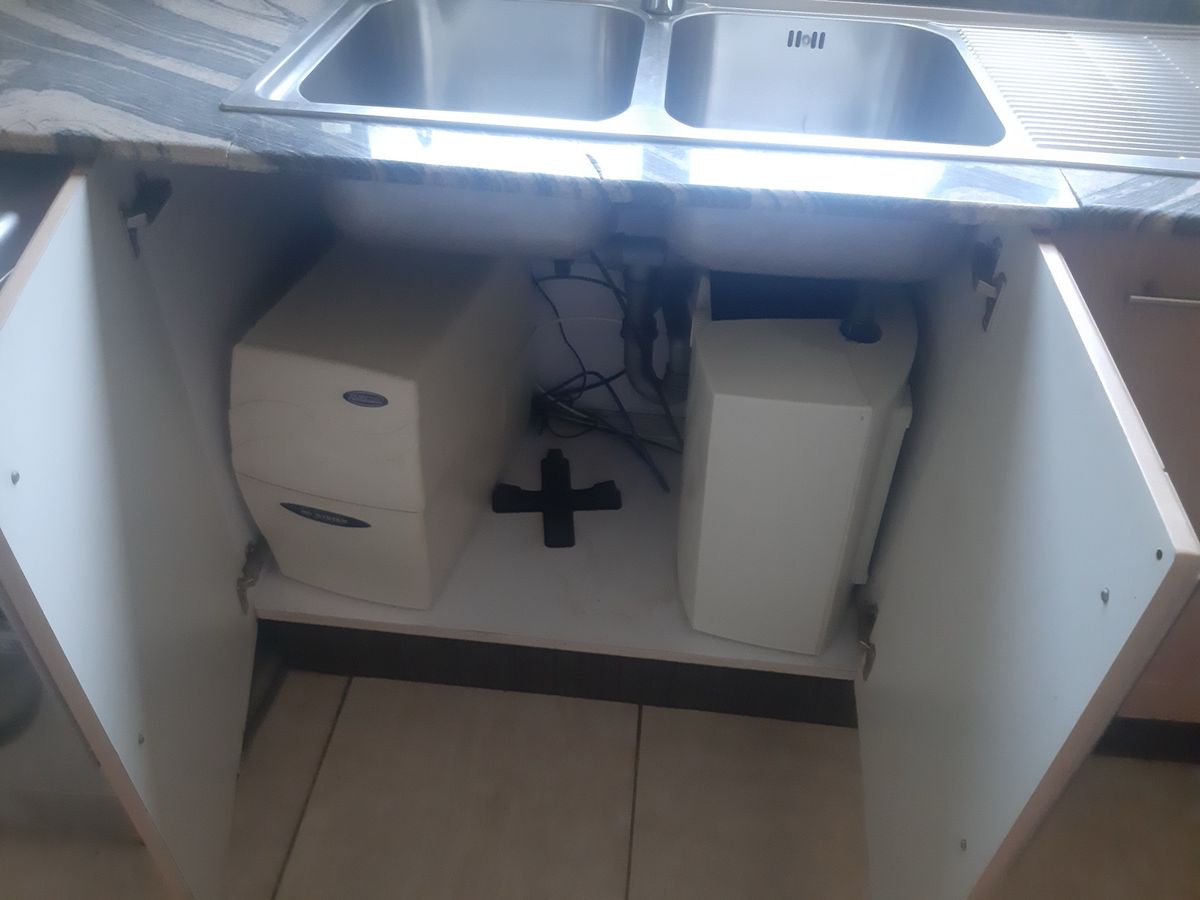
Photo: Fanti Salms via Wikimedia Commons, CC BY-SA 4.0
Your water filter options in Taiwan, compared
- Kettle or hot water pot: cheapest, kills germs, removes most chlorine taste. Does nothing for rust or sediment from old pipes, and you wait for it to cool.
- Pitcher filter: no installation, and you take it with you when you move. Small capacity, and the cartridges need changing every month or two, so the running cost adds up.
- Filtered water dispenser: hot and cold on demand. Big, uses electricity around the clock, and the internal tank needs cleaning. Some people rent one with a maintenance contract.
- Under-sink filter: fixed to the cold water line, filters sediment, rust, chlorine and odours, with its own faucet. Needs the landlord's agreement and a short installation.
- Reverse osmosis (RO): removes almost everything, including minerals, but wastes water and needs more maintenance. Overkill for Taipei's city water in most homes.
Which one we'd pick
- Your first week: buy bottled. You have bigger things to sort out.
- Staying under about six months, or the landlord says no to plumbing changes: an electric kettle plus a pitcher filter. Cheap, portable, good enough.
- Staying a year or more, in a rental you control: an under-sink filter. It usually pays for itself within a few months, removes the chlorine taste and old pipe sediment, and you never carry water again.
- Family with a baby, or anyone on a low-sodium diet: an under-sink filter, but tell the installer, because the softening stage in many systems adds a small amount of sodium. Low-sodium options exist.
Whatever you choose, change the cartridges on schedule. An old, overdue filter can be worse than no filter.
If you're renting, before you install anything
1. Ask the landlord first, in writing. An under-sink filter connects to the cold water line. Many landlords agree when someone explains it properly in Chinese.
2. Ask about the tank. When was it last cleaned, and by whom? Ask building management for the record.
3. Check what's already there. Some furnished flats come with a dispenser or filter. Ask when the cartridges were last changed; if nobody knows, change them before you drink from it.
4. Plan the move-out. Agree whether the filter stays or goes with you when the lease ends.
Water itself is cheap here, billed every two months; our guide to utility bills in Taiwan shows what to expect.
Let us set up your filtered water
This is exactly the problem our water filter service solves. With TRA Live's water filter installation:
- We check your kitchen and recommend the system that fits (usually a 5-stage under-sink unit). We quote based on the model and how the installation works in your kitchen.
- We explain it to your landlord in Chinese and get their agreement before anything is touched.
- A professional installs it and tests it with you before leaving.
- We remind you when filters are due, and can replace them for you.
Message us on LINE with a photo of your sink cabinet and whether you rent, and we will take it from there. Still apartment hunting? Our guide to hidden costs beyond rent shows where drinking water fits in your budget.
FAQ
Is Taiwan tap water safe to drink?
At the source, yes: it meets national drinking water standards, and Taipei's tests for 141 items. What reaches your glass depends on your building's water tank and pipes, which is why most locals boil or filter it at home.
Can you drink tap water in Taipei hotels and apartments?
Treat it like any home: fine for brushing teeth and cooking, but boil or filter it for drinking unless the building can show a recent tank cleaning record. Public drinking fountains are tested and safe.
Does boiling Taiwan tap water make it safe?
Boiling kills germs and drives off most of the chlorine taste. It does not remove rust or sediment from old pipes, which is what a filter is for.
How much does a home water filter cost in Taiwan?
It depends on the model and how the installation works in your kitchen, so we quote each home individually. After that, the only running cost is replacement filters, which also depend on the model, so for one person who would otherwise buy bottled water, the system usually pays for itself within a few months.
Why does Taiwan tap water smell like chlorine?
Chlorine keeps the water safe in the pipes. The standard allows 0.2 to 1.0 mg/L normally and up to 3.0 after heavy rain. It is harmless; a carbon filter or boiling removes the taste.